Budget
Best Engravable Jewelry
Engraving cuts into the surface. If the surface is a coating, the letters are where it fails first - which makes the metal the whole decision.
#ad — we earn a commission on qualifying Amazon purchases at no extra cost to you. How this site is funded. Prices are live and shown as of October 23, 2026.
The short answer
Buy engravable jewelry in solid metal - sterling silver, stainless steel or karat gold - and never in plated brass. Engraving cuts through the surface, so on a plated piece the letters are exactly where the coating breaks and the base metal shows. The sterling engraved bar is the best all-round buy; the 316L steel dog tag is the toughest.
The picks, ranked
| # | Pick | Material | Score | Price |
|---|---|---|---|---|
| 1 |  RESVIVI Sterling Silver 3D Engraved Personalized Bar Necklace Engraving cut into solid sterling rather than through a coating, on the sturdiest pendant shape for custom text Top pick | 925 sterling silver engraved bar pendant, custom text.Best overall | 8.3/10 | |
| 2 |  Geoffrey Beene 316L Stainless Steel Engravable Dog Tag Necklace 316L stainless steel takes a deep engraving and then refuses to tarnish, discolor or wear at the letters | 316L surgical stainless steel dog tag, 22 x 40mm, on a 24in stainless steel chain. Sold as engravable. Solid metal in the silver colorway - no plating, so there is no finish to lose.Most durable | 8.9/10 | |
| 3 |  Raymard 925 Sterling Silver Men's Signet Ring, 9mm The traditional engraving format - a thick solid sterling face with enough metal to be re-cut generations later | 925 sterling silver signet ring, 9mm face, high polished.Best heirloom format | 7.8/10 | |
| 4 | 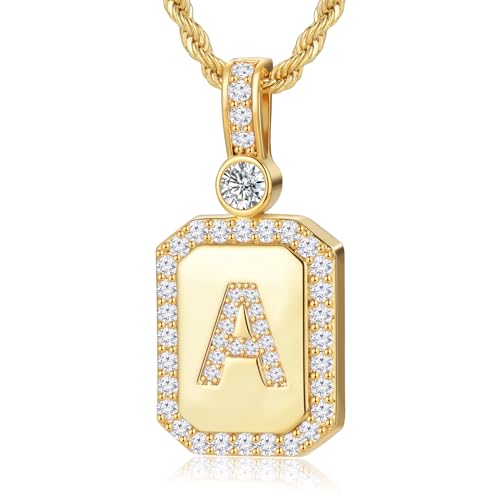 Meeshi Gold-Filled Personalized Initial Pendant Necklace Gold-filled rather than the plated brass that dominates personalized jewelry, so the gold tone is not on a clock | Gold-filled initial pendant necklace. Gold-filled is the bonded 5%-by-weight standard, not plating - unusual in personalized jewelry, where plated brass is the norm.Best gold-tone option | 8.2/10 | |
| 5 |  YOUFENG S925 Silver Heart Photo Locket Necklace The engravable piece that also holds photographs, in sterling rather than the plated base most lockets use | S925 sterling silver heart locket that holds photographs.Best sentimental piece | 7.7/10 |
Engraving is a cut, and a cut needs something to cut into
Personalized jewelry is sold on fonts, layouts and how many characters fit. None of that decides whether the piece is still legible in ten years. One thing does: what the letters are cut into.
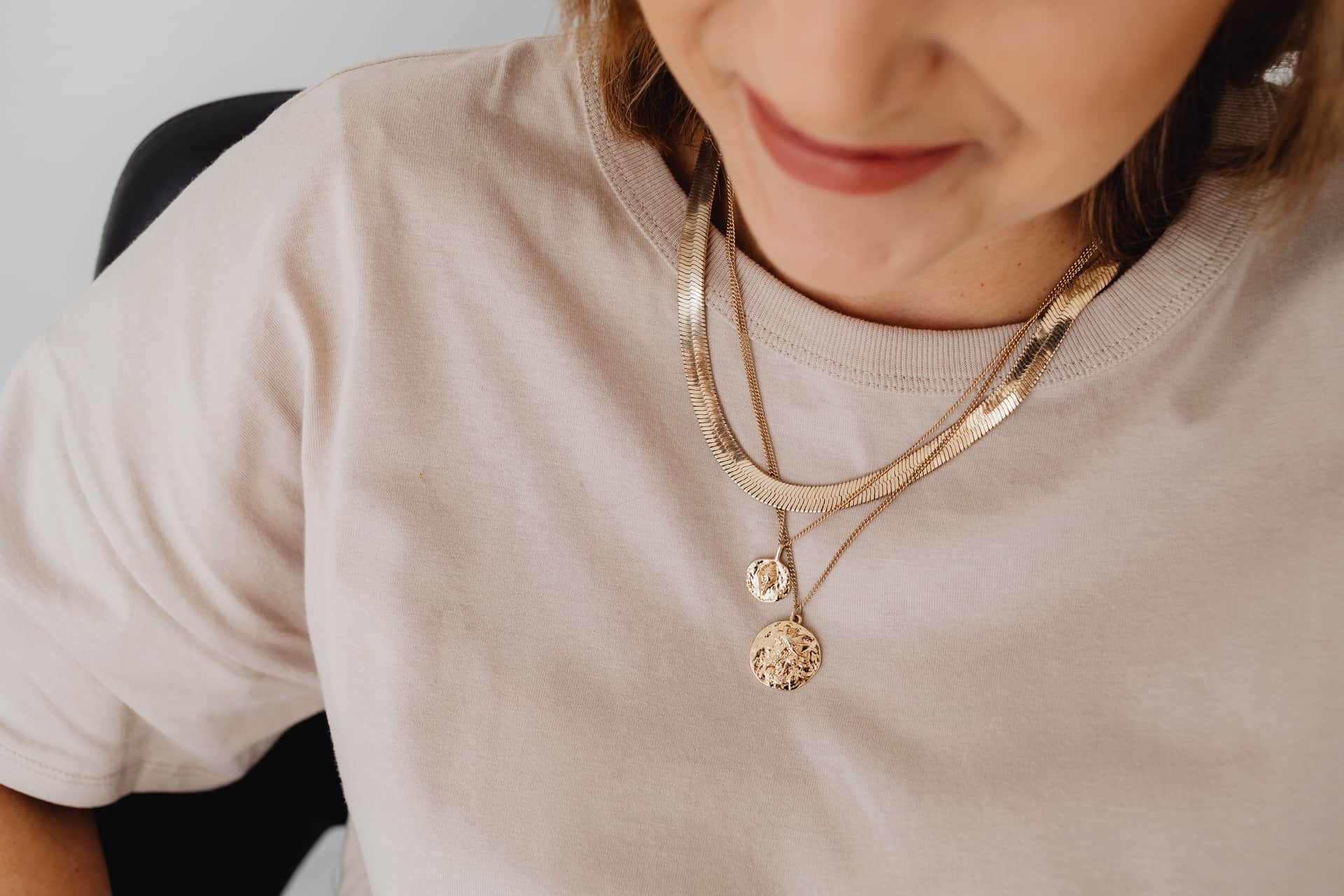
Engraving removes metal. A rotary or laser tool cuts a groove into the surface, and the visible result is the contrast between the cut groove and the polished face around it. On a solid piece - sterling, steel, karat gold - the groove is the same metal all the way down, so the engraving ages exactly as the rest of the piece ages. On a plated piece, the groove goes straight through a coating that is measured in ten-thousandths of a millimeter and lands in whatever brass or zinc alloy is underneath. The letters start out looking fine, because the cut faces are freshly exposed. Within a year or two they are the first place the piece looks wrong: darker, duller, a different color from the face around them.
That is why the dominant product in this category - a personalized pendant in plated brass, sold at a price no solid-metal piece can match - is the one to avoid. It is not that plating is dishonest; it is that engraving is the single worst thing you can do to a plated surface. What plating is and how thin it really is sits in what gold plated means.
How we ranked them
- Solid metal or nothing. Every pick on this page is sterling silver, 316L stainless steel or gold-filled. Nothing here is plated brass. That single filter removes most of the category.
- How much metal is under the letters. A thick signet face can be re-engraved decades later; a thin stamped disc cannot. Depth of available material is what separates a piece that can be refreshed from one that can only be replaced.
- Shape strength. Cut-out script names look delightful and snap at the thin connections. A bar, a tag, a disc and a signet face are all continuous shapes with no weak joins, and all four outlast script by a wide margin.
- The returns reality. Custom-engraved items are generally non-returnable, at any retailer. That makes spelling, layout and size choices permanent, and it is worth weighting a simpler, harder-to-get-wrong piece upward for exactly that reason.
The materials, compared
| Material | How the engraving ages | Can it be re-engraved or polished? | Tarnish behavior |
|---|---|---|---|
| 925 sterling silver | Ages with the piece - the groove is the same metal | Yes, and it is the easiest metal here to re-cut | Tarnishes, but tarnish is surface and reversible |
| 316L stainless steel | Essentially does not change | Hard to re-cut; it is also hard to damage | Does not tarnish in normal wear |
| Gold-filled | Stable - the bonded layer is at least 1/20th of the item's weight | Light polishing only; the layer is thick but finite | Resists tarnish for years |
| Gold-plated brass | Letters discolor first, often within a year | No - polishing removes the remaining coating | The exposed base metal discolors and can mark skin |
Why the engraved sterling bar wins
The bar necklace is the pick because it gets all four criteria right at a price most people will actually pay. The engraving is cut into solid 925 sterling, so there is no coating to break at the letters. A bar is a continuous rectangle with no thin sections, which makes it the strongest shape in personalized jewelry - the opposite of a cut-out name necklace, where the piece is held together by the thin bits of the script. And it takes a decent character count without the text becoming microscopic.
The honest cons are small but real. Sterling tarnishes, which on an engraved piece is actually mildly helpful - tarnish settles into the grooves and increases contrast - until you polish it, at which point aggressive polishing is the thing that softens engraving over decades. The fix is to polish gently and infrequently, with a cloth rather than a dip. And it is custom, so it is not coming back: check the spelling twice before you order. Keeping sterling bright without scrubbing the letters away is covered in how to clean silver jewelry.
The steel dog tag is the one that cannot be damaged
If the piece is going on someone who works with their hands, swims, or simply forgets jewelry exists, 316L stainless steel is the correct answer and nothing else comes close. The alloy runs roughly 16 to 18 percent chromium with 2 to 3 percent molybdenum, and that chromium is what forms the passive surface layer that stops it corroding. It does not tarnish. It does not need polishing, which means the engraving never gets polished away. It survives showers, pools and sweat without a thought.
The trade-offs are the flip side of the same hardness. Steel is difficult to re-engrave, so what you order is what you keep. It is heavier than sterling at the same size, which some people like on a dog tag and nobody likes on a delicate pendant. And steel has an appearance that reads as tool-like rather than precious - which is exactly right for a tag and wrong for a gift that is meant to look dressy. The alloy itself is unpacked in what 316L stainless steel is.
The signet: the format engraving was invented for
A signet ring is a flat face of solid metal on a band, and it exists specifically to be engraved - originally so it could be pressed into wax. That history produces the one property no other piece on this page has: there is enough metal in the face that it can be polished smooth and re-cut, more than once, over generations. A monogram can become a different monogram. That is why signets get handed down and bar pendants usually do not.
In sterling, the face will scratch - it is soft metal on a hand, and that is the most abrasive place jewelry lives. On a signet, most people read that as patina rather than damage, which is a genuinely different standard from the one we apply to a plated piece. If scratches would bother you, a signet is the wrong purchase and a pendant is the right one. Sizing is also a real consideration: it is a ring, so it has to fit, and our method for that is in how to find a ring size.
The gold-tone problem, and the one honest answer to it
Most buyers of personalized jewelry want gold tone, and gold tone is where this category goes wrong fastest. The default product is plated brass: a micron-scale gold layer on a copper-zinc base, engraved through. It looks right in the photograph and wrong within a year or two, and the engraved letters are the part that turns first.
The initial pendant here is gold-filled instead, which is a genuinely different material. Gold-filled carries a bonded gold layer that is at minimum 1/20th - five percent - of the item's total weight. That is on the order of a hundred times the metal of a typical plating, which is why gold-filled pieces last years to decades rather than months, and why a gold-filled pendant is the only gold-tone personalized piece we will recommend. It is the most expensive piece on this page, and that cost is the material, not the branding.
The honest limitation is what gets personalized: it is a single letter, not a name. For some recipients a full name is the point, and in that case the right call is a sterling name necklace rather than a gold-tone plated one. The gold-filled standard itself is explained in what gold-filled means.
The locket, and the one part that eventually fails
A locket is the piece people keep longest, and the sterling one here is worth the small premium over the plated lockets that fill the category, for a reason specific to the format: lockets get handled. Every time it is opened, fingers are on the surface, and a handled plated piece wears faster than one that just hangs. Sterling has nothing to wear off.
What does eventually fail is the hinge. That is mechanical and universal - every locket ever made loosens at the hinge with repeated opening, and at this price it is not a repairable part. The practical advice is simple: a locket is made to be opened occasionally, not daily. Fitting photographs is also fiddlier than the listing images suggest; trim slightly smaller than you think, and use a paper template first.
Ordering an engraving without regretting it
- Fewer characters, bigger letters. Engraving fields are fixed. Twenty characters on a bar means tiny text; eight means text you can read at arm's length. Dates and initials outperform sentences on every piece in this category.
- Check the spelling twice, then once more. Custom items are non-returnable almost everywhere. This is the one purchase where proofreading is a material part of the buying process.
- Decide front or back before you order. Back engraving keeps a clean face and is the safer choice for a gift where you are unsure of taste. Front engraving is the statement, and it is permanent.
- Avoid engraving anything you will polish hard. Aggressive polishing is the only thing that erodes engraving in solid metal, and it takes decades. A soft cloth is all any of these need.
- Match the metal to the wearer, not to the photograph. Someone who never takes jewelry off should have steel or gold-filled. Someone who wants it to look precious should have sterling. Listing photography flatters every one of these equally, and that is the least useful signal available.
What we would actually buy
For most gifts: the engraved sterling bar, because it is solid metal, a strong shape and a price that does not make the engraving feel like a risk. For a man who is hard on everything: the 316L dog tag, which is the only piece here that genuinely cannot be worn out. For something meant to be inherited: the sterling signet, which is the only one that can be re-cut by a future owner. For a gold tone that is not a countdown: the gold-filled initial pendant, and nothing plated. And for a memorial or milestone: the sterling locket, opened gently. If the recipient is a parent or grandparent, the personalized options with stones are collected in birthstone jewelry for mom.
Every pick in detail
What each one is actually made of, how long it realistically lasts in that material, who it is for and who should skip it.
1 · Best overall
RESVIVI Sterling Silver 3D Engraved Personalized Bar Necklace
Engraving on solid sterling rather than a plated surface. Engraved plating wears through at the letters first; this does not have that problem.
- What it is
- 925 sterling silver engraved bar pendant, custom text.
- Realistic lifespan
- Indefinite as a material. Engraving on sterling softens over decades of polishing - polish gently and it stays crisp far longer.
- 925 sterling
- 3D engraving
- custom text
What works
- Engraving into solid metal, not through a coating
- Bar shape is far sturdier than cut-out script
What does not
- Aggressive polishing softens engraving over time
- Custom items are typically non-returnable
Skip it if: you might get the spelling wrong. Check it twice; this is not coming back.
#ad how we make money · price as of October 23, 2026
Best for a dated or named piece meant to last. Score 8.3/10 from published specifications.
2 · Most durable
Geoffrey Beene 316L Stainless Steel Engravable Dog Tag Necklace
$24 for a piece that cannot tarnish, cannot corrode and can be engraved. Steel's whole argument in one product.
- What it is
- 316L surgical stainless steel dog tag, 22 x 40mm, on a 24in stainless steel chain. Sold as engravable. Solid metal in the silver colorway - no plating, so there is no finish to lose.
- Realistic lifespan
- Effectively indefinite. Steel takes engraving and holds it.
- 316L steel
- 22 x 40mm tag
- 24in chain
What works
- Engravable in a material that will not wear the engraving away
- 316L is the grade actually named, not a vague 'stainless steel'
- Genuinely indestructible in normal use
What does not
- Large flat pendant swings and knocks
- 24in is a long chain - it sits low, and shortening it means buying another chain
- Steel's hardness makes deep engraving more expensive than on silver
Skip it if: you want warmth or subtlety. A dog tag is a statement shape and it is not a quiet one.
#ad how we make money · price as of October 23, 2026
Best for an engraved everyday piece worn through anything. Score 8.9/10 from published specifications.
3 · Best heirloom format
Raymard 925 Sterling Silver Men's Signet Ring, 9mm
Solid sterling at a weight you can feel. It will scratch, and on a signet that reads as character rather than damage.
- What it is
- 925 sterling silver signet ring, 9mm face, high polished.
- Realistic lifespan
- Indefinite as a material, but sterling is soft: a signet face collects scratches quickly and the high polish dulls to a satin finish within a year or two of daily wear. Many people prefer it that way.
- 9mm face
- 925 sterling
- high polish
What works
- Real weight in a real metal - the difference from plated steel is obvious in the hand
- Can be engraved, resized and repaired by any jeweler, unlike steel
What does not
- Sterling is soft; the mirror polish will not survive daily wear
- Sterling on hands tarnishes faster than anywhere else
Skip it if: you want it to stay mirror-bright. Buy stainless steel, which stays polished but cannot be engraved or resized.
#ad how we make money · price as of October 23, 2026
Best for someone who wants a ring that ages visibly. Score 7.8/10 from published specifications.
4 · Best gold-tone option
Meeshi Gold-Filled Personalized Initial Pendant Necklace
A personalized piece in gold-filled rather than plated brass. That is why it costs what it costs, and it is the right reason.
- What it is
- Gold-filled initial pendant necklace. Gold-filled is the bonded 5%-by-weight standard, not plating - unusual in personalized jewelry, where plated brass is the norm.
- Realistic lifespan
- 10-30 years for the gold layer. Initial pendants are small and low-friction, so this is close to the best case for gold-filled.
- gold-filled
- initial pendant
- A-Z
What works
- Gold-filled in a category dominated by plating
- Single-letter pendants avoid the thin-script fragility of full-name necklaces
What does not
- By far the most expensive personalized piece here
- One letter is less personal than a full name, for some recipients
Skip it if: the budget is the constraint. A sterling name necklace costs a fifth of this and is also a real material.
#ad how we make money · price as of October 23, 2026
Best for a personalized gift meant to be kept. Score 8.2/10 from published specifications.
5 · Best sentimental piece
YOUFENG S925 Silver Heart Photo Locket Necklace
A real silver locket for $30. Lockets are hinges wrapped in sentiment - open it gently and it will last.
- What it is
- S925 sterling silver heart locket that holds photographs.
- Realistic lifespan
- Sterling is indefinite. The hinge is the wear point on every locket ever made, and it is not repairable at this price point.
- 925 sterling
- photo locket
- hinged
What works
- Sterling rather than plated - lockets are handled constantly, and plating on a handled piece fails fast
- Holds real photographs, which is the entire point
What does not
- Hinges loosen with repeated opening; that is a mechanical certainty
- Fitting photographs neatly is fiddlier than the listing photos suggest
Skip it if: it will be opened daily. Lockets are made to be opened occasionally; daily use finds the hinge.
#ad how we make money · price as of October 23, 2026
Best for a memorial or milestone gift. Score 7.7/10 from published specifications.
Common questions
Does engraving wear off?
Not on solid metal. An engraving cut into sterling, steel or karat gold is a groove in the same material, so it ages with the piece and only softens after decades of hard polishing. On plated jewelry it is a different story: the cut goes through the coating into the base metal, and the letters are the first place the piece discolors - often within a year.
What is the best metal for engraved jewelry?
Sterling silver for most gifts - it is solid, it engraves cleanly and it can be re-cut. 316L stainless steel if the wearer is hard on jewelry, because it does not tarnish and never needs the polishing that erodes letters. Gold-filled if you want gold tone that lasts. Avoid plated brass for anything engraved.
Can engraved jewelry be returned?
Usually not. Personalized and custom-engraved items are excluded from standard returns at most retailers, because they cannot be resold. Treat the order form as final: check the spelling, the character count and the placement before you submit it.
Can an engraving be removed or changed later?
Sometimes, and it depends entirely on how much metal is underneath. A thick signet face can be polished smooth and re-engraved, which is why signets get passed down. A thin stamped pendant usually cannot - polishing deep enough to remove the letters would leave the piece visibly dished. Steel is hard enough that re-cutting is rarely practical at all.
Is laser engraving better than hand engraving?
They are different, not ranked. Laser engraving is shallower and more consistent, which suits small text and fine fonts, and it is what almost all of this price band uses. Hand or rotary engraving cuts deeper and catches light differently, which reads as more traditional on a signet. On solid metal both last; on plating, neither does.
Sources
Every specification and figure on this page traces to one of these. Where a source does not publish a number, the page says so rather than estimating one.
- 16 CFR 23.3 - Misrepresentation as to gold content (FTC Jewelry Guides) — Defines the gold-plate minimum (0.175 microns), heavy gold electroplate (2.5 microns) and the gold-filled 1/20th-by-weight threshold.
- 16 CFR 23.5 - Misrepresentation as to silver content — 'Sterling' requires at least 925/1000ths pure silver; 'coin silver' at least 900/1000ths.
- voestalpine - 316L (UNS S31603) alloy datasheet — Mill datasheet giving the 316L composition range quoted on this site: 16.0-18.0% chromium, 10.0-14.0% nickel, 2.0-3.0% molybdenum.
- AG Metals - Gold-Filled (mill supplier technical page) — States the trade designation in the supplier's own words: '14/20 GF is the designation for 14 karat gold-filled', the 1/20th being the ratio of karat gold to base metal by weight (5%), bonded over a CDA 220 base.
- 16 CFR Part 23 - Guides for the Jewelry, Precious Metals, and Pewter Industries — The full FTC Jewelry Guides, which govern every material claim quoted on this site.
Read next
- What gold-filled means
The 1/20th standard, and why it outlasts plating by years.
- What 316L stainless steel is
The alloy behind the dog tag, and the chromium that stops it corroding.
- Best initial necklaces
The personalized format argued on material rather than font.
- How to clean silver jewelry
How to keep sterling bright without polishing the engraving away.