Care
Best Jewelry Cleaners
Ranked on effectiveness and on what each one will destroy - because the wrong cleaner on the right material is how most jewelry actually gets ruined.
#ad — we earn a commission on qualifying Amazon purchases at no extra cost to you. How this site is funded. Prices are live and shown as of October 22, 2026.
The short answer
Match the cleaner to the material. A treated polishing cloth is the safest and handles most routine cleaning. Ultrasonic cleaners and dips destroy pearls, opals, turquoise, emerald and anything plated - that is a prohibition, not a caution.
The picks, ranked
| # | Pick | Material | Score | Price |
|---|---|---|---|---|
| 1 |  Connoisseurs Extra Large Polishing Cloth, 14x14in Safe on more materials than anything else here, and it handles most routine cleaning Top pick | Impregnated polishing cloth, 14x14in. Two-layer cloths carry a mild polishing compound in the inner layer and a clean buffing surface outside.Safest and best first buy | 8.5/10 | |
| 2 |  Rosenthal Collection Anti-Tarnish Strips, 100 Tabs Prevention beats polish - every polish removes silver permanently, a strip removes nothing | Anti-tarnish tabs, 1x1in, 100 pieces. They work by absorbing the airborne sulfur compounds that cause silver tarnish, in a sealed space.Best prevention | 8.6/10 | |
| 3 | 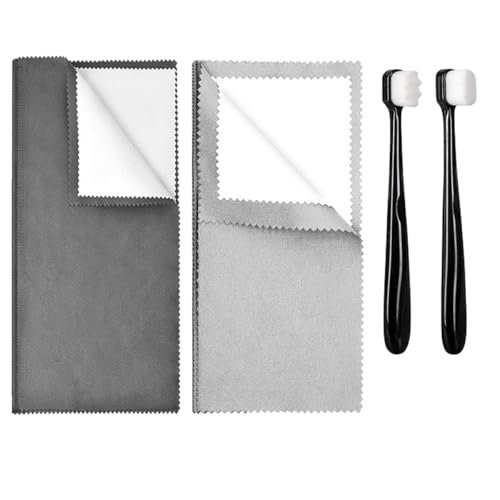 Syyflibb Jewelry Cleaning Cloth and Ultra-Soft Brush Set Soft brush plus warm soapy water is the method jewelers actually recommend | Polishing cloths plus ultra-soft brushes. Bristle softness is the whole specification: a stiff brush scratches gold, which is soft.Best everyday method | 8.1/10 | |
| 4 |  Wright's by Weiman Silver Cleaner and Polish Cream, Ammonia-Free Ammonia-free cream for tarnish a cloth cannot shift - used sparingly | Ammonia-free silver polish cream with a polishing cloth. Polish removes tarnish by mild abrasion - it takes away a microscopic layer of silver along with the tarnish.Best for heavy tarnish | 7.9/10 | |
| 5 | 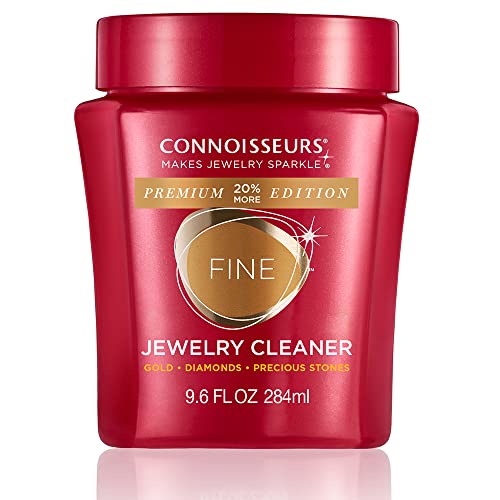 Connoisseurs Fine Jewelry Cleaner Solution, 9.6 fl oz The dip-and-basket standard, for gold and hard stones only | Dip cleaning solution with an immersion basket, formulated for gold and hard gemstones.Best dip cleaner | 7.6/10 | |
| 6 |  Weiman Fine Jewelry Cleaner Liquid with Brush The integrated brush reaches under a setting, which is where the dullness lives | Liquid jewelry cleaner with an integrated brush, formulated for gold, platinum and precious stones.Best with a brush | 7.6/10 | |
| 7 |  OSLTWI 48kHz Ultrasonic Jewelry Cleaner Machine The most effective and the most capable of destroying something - read the list first | Ultrasonic cleaning tank, stated at 48kHz. Ultrasonic cleaners work by cavitation - microscopic bubbles collapsing against the surface - which is genuinely effective and genuinely unsuitable for some materials.Most powerful | 7.3/10 | $25.57 - View on Amazon $42.79 40% off |
Read this table before you buy anything
Most ruined jewelry is not ruined by wear. It is ruined by the right cleaning method applied to the wrong material - and the products do not carry warnings prominent enough to stop it. The three rows people get wrong most often have pages of their own: pearls, titanium and stainless steel.
| Material | Soft cloth | Soapy water + brush | Dip / liquid | Ultrasonic | Polish cream |
|---|---|---|---|---|---|
| Solid gold | Yes | Yes | Yes | Yes | Sparingly |
| Gold filled | Yes | Yes | Cautiously | No | No |
| Anything plated | Yes | No | No | No | No |
| Sterling silver | Yes | Yes | Yes | Yes | Yes, sparingly |
| Stainless steel / titanium | Yes | Yes | Yes | Yes | Yes |
| Diamond, sapphire, ruby, moissanite, CZ | Yes | Yes | Yes | Yes | N/A |
| Pearl | Damp cloth only | No | No | No | No |
| Opal, turquoise, amber, coral | Damp cloth only | No | No | No | No |
| Emerald | Damp cloth only | Cautiously | No | No | No |
The three rules that prevent most damage
1. Never put a porous or organic stone in a dip or an ultrasonic cleaner. Pearl, opal, turquoise, amber, coral and emerald are all destroyed by both. Cavitation in an ultrasonic cleaner physically breaks up included and porous material; dips attack it chemically. This is not a caution to weigh - it is a prohibition.
2. Never polish plated jewelry. Polish is abrasive by design. Plating is measured in fractions of a micron. Polishing it removes it. This is the single most common way people destroy a piece that was working fine.
3. Ultrasonic cleaners loosen prongs. On old or worn settings the vibration can shift a stone that was marginally held. If a setting is old, have it checked rather than cleaned aggressively.
What most cleaning actually needs
Warm water, a drop of dish soap, a soft brush, a rinse and a dry cloth. That handles the large majority of jewelry cleaning safely and costs almost nothing.
Most of what looks like tarnish or damage is a film of soap, lotion and skin oil. It wipes off. Reaching for a chemical or a machine before trying soapy water is how people escalate a non-problem into a real one.
Polishing costs you silver
Silver polish removes tarnish by mild abrasion, taking a microscopic layer of silver with it. Done occasionally over decades that is fine; done weekly it softens hallmarks and engraving.
So the genuinely useful strategy for silver is prevention: store it in a closed box with anti-tarnish strips and you will rarely need polish at all. That is why the strips rank so high on a page about cleaners.
Every pick in detail
What each one is actually made of, how long it realistically lasts in that material, who it is for and who should skip it.
1 · Safest and best first buy
Connoisseurs Extra Large Polishing Cloth, 14x14in
The safest cleaning tool here and the one to reach for first. Ninety percent of jewelry cleaning should be this and nothing else.
- What it is
- Impregnated polishing cloth, 14x14in. Two-layer cloths carry a mild polishing compound in the inner layer and a clean buffing surface outside.
- Realistic lifespan
- Until it is black. A treated cloth is consumable - and it should never be washed, because washing removes the compound that makes it work.
- 14x14in
- impregnated
- two-layer
What works
- Safe on far more materials than any liquid or machine here
- Regular light use prevents the tarnish that would otherwise need abrasive polish
- Costs less than a cheap chain
What does not
- Do not wash it - washing removes the compound and turns it into a rag
- Cannot reach inside chain links or behind set stones
Skip it if: you need to clean pearls. Wipe pearls with a plain damp soft cloth and nothing else - no compound, no polish, no dip.
#ad how we make money · price as of October 22, 2026
Best for routine upkeep on almost everything - silver, gold, gold-filled and steel. Score 8.5/10 from published specifications.
2 · Best prevention
Rosenthal Collection Anti-Tarnish Strips, 100 Tabs
The most effective thing on this page, because it prevents tarnish instead of removing it - and every removal costs you silver.
- What it is
- Anti-tarnish tabs, 1x1in, 100 pieces. They work by absorbing the airborne sulfur compounds that cause silver tarnish, in a sealed space.
- Realistic lifespan
- Each tab is typically effective for around six months in a closed container, then saturates. The 100-pack is a multi-year supply.
- 100 tabs
- 1x1in
- ~6 month life each
What works
- Prevention beats polish: every polish removes silver permanently, a strip removes nothing
- A hundred tabs covers a whole box for years at a few cents each
- Works in any sealed container - a box, a bag, a drawer
What does not
- Only works in a CLOSED space; a tab in an open tray does nothing
- They expire silently - mark the date you put them in
Skip it if: you own no sterling. Gold, steel and titanium do not tarnish, and these strips do nothing for them.
#ad how we make money · price as of October 22, 2026
Best for anyone who owns sterling and is tired of polishing it. Score 8.6/10 from published specifications.
3 · Best everyday method
Syyflibb Jewelry Cleaning Cloth and Ultra-Soft Brush Set
Six dollars for the two tools that do most of the work safely. Buy this before buying a machine.
- What it is
- Polishing cloths plus ultra-soft brushes. Bristle softness is the whole specification: a stiff brush scratches gold, which is soft.
- Realistic lifespan
- Brushes last years. Cloths are consumable.
- ultra-soft bristles
- 2 cloths
- 2 brushes
What works
- Soft brushes plus warm soapy water is the method jewelers actually recommend for routine cleaning
- Safe on materials that dips and ultrasonics would damage
- Costs less than a single professional clean
What does not
- Manual - it takes minutes rather than seconds
- Will not shift heavy tarnish; that needs polish
Skip it if: you have heavy tarnish on sterling. A brush will not touch it - you need the polish cream first, then this for upkeep.
#ad how we make money · price as of October 22, 2026
Best for warm soapy water cleaning, which is the correct method for most jewelry most of the time. Score 8.1/10 from published specifications.
4 · Best for heavy tarnish
Wright's by Weiman Silver Cleaner and Polish Cream, Ammonia-Free
The right tool for tarnished sterling, used sparingly. Polishing is abrasive by definition - the goal is to need it rarely, not to do it well.
- What it is
- Ammonia-free silver polish cream with a polishing cloth. Polish removes tarnish by mild abrasion - it takes away a microscopic layer of silver along with the tarnish.
- Realistic lifespan
- A jar lasts years of occasional use. What it costs you is silver: every polish removes a little, permanently.
- ammonia-free
- cream polish
- cloth included
What works
- Ammonia-free matters: ammonia attacks some gemstone settings and can dull certain finishes
- Cream reaches detail that a cloth alone cannot
What does not
- All polish is abrasive - over-polishing softens hallmarks and engraving over years
- Not for plated pieces: polishing plating removes the plating
- Never on pearls
Skip it if: your pieces are plated. Polish takes the plating off, which is the fastest way to ruin something that was fine.
#ad how we make money · price as of October 22, 2026
Best for sterling silver that has gone dark in storage. Score 7.9/10 from published specifications.
5 · Best dip cleaner
Connoisseurs Fine Jewelry Cleaner Solution, 9.6 fl oz
The default household jewelry cleaner, and it works - on the materials it is meant for. The basket is what makes it usable.
- What it is
- Dip cleaning solution with an immersion basket, formulated for gold and hard gemstones.
- Realistic lifespan
- The solution is consumable; the jar and basket last indefinitely. Solution loses effectiveness once visibly dirty.
- 9.6 fl oz
- dip basket
- gold + hard stones
What works
- The basket means you never fish a ring out of solution with your fingers
- Works in a few minutes on the film that dulls stones
What does not
- Not for pearls, opals, turquoise, coral or amber - dips attack porous materials
- Not for plated pieces; repeated dipping strips thin coatings
Skip it if: your jewelry is mostly plated or pearl. Dip cleaners are formulated for solid precious metal and hard stones, and they will damage the rest.
#ad how we make money · price as of October 22, 2026
Best for gold, platinum and hard stones - diamond, sapphire, ruby, moissanite, CZ. Score 7.6/10 from published specifications.
6 · Best with a brush
Weiman Fine Jewelry Cleaner Liquid with Brush
The brush is the difference. Dip cleaners loosen the film; a brush is what actually removes it from behind a setting.
- What it is
- Liquid jewelry cleaner with an integrated brush, formulated for gold, platinum and precious stones.
- Realistic lifespan
- Consumable. The brush outlasts the bottle.
- with brush
- gold + platinum
- liquid
What works
- The integrated brush reaches the underside of a setting, which is where the dullness actually lives
- Formulated for precious metal rather than as a general household cleaner
What does not
- Same restriction as every dip: not for pearls, opals, turquoise, coral or amber
- Brushing plated pieces accelerates coating wear
Skip it if: your rings are plated. Brushing a plated ring is a fast way to wear through the coating at the high points.
#ad how we make money · price as of October 22, 2026
Best for gold and platinum settings where dirt collects under the stone. Score 7.6/10 from published specifications.
7 · Most powerful
OSLTWI 48kHz Ultrasonic Jewelry Cleaner Machine
The most effective cleaning method here, and the one most capable of destroying something. Read the do-not-list before you switch it on.
- What it is
- Ultrasonic cleaning tank, stated at 48kHz. Ultrasonic cleaners work by cavitation - microscopic bubbles collapsing against the surface - which is genuinely effective and genuinely unsuitable for some materials.
- Realistic lifespan
- Transducers in consumer ultrasonic units typically last several years of occasional use. Continuous use shortens that considerably.
- 48kHz
- tank cleaner
- cavitation
What works
- Removes what a cloth cannot - the film behind stones and inside chain links
- Cheaper than two professional cleanings
What does not
- NEVER put pearls, opals, emeralds, turquoise, amber or coral in it. Cavitation destroys porous and included stones
- Loosens prongs on old or worn settings - one of the classic ways to lose a stone
- Not for anything plated: cavitation lifts thin coatings
Skip it if: your collection is mostly plated, pearl or opal. For that collection this machine is a hazard, not a tool - buy the polishing cloth instead.
Best for solid gold, platinum, diamond and hard synthetic stones in metal settings. Score 7.3/10 from published specifications.
Common questions
Can you put pearls in an ultrasonic cleaner?
Never. Cavitation damages nacre and can loosen the pearl from its post or thread. Pearls get a plain damp soft cloth and nothing else - no dip, no ultrasonic, no polish.
What is the safest jewelry cleaner?
A treated polishing cloth, followed by warm soapy water with a soft brush. Between them they handle most routine cleaning and are safe on far more materials than any liquid or machine.
Can I clean gold plated jewelry?
Only with a soft dry cloth. No polish, no dip, no ultrasonic, no brush - every one of those removes plating, which is measured in fractions of a micron and does not grow back.
Does jewelry cleaner damage prongs?
Ultrasonic cleaners can loosen prongs that were already worn, which is a real cause of lost stones. If a setting is old, have it checked by a jeweler before cleaning it aggressively.
How often should I clean my jewelry?
A wipe with a soft cloth after wearing is enough for most pieces. Deeper cleaning only when it looks dull. Over-cleaning silver in particular costs you metal every time.
Sources
Every specification and figure on this page traces to one of these. Where a source does not publish a number, the page says so rather than estimating one.
- 16 CFR 23.5 - Misrepresentation as to silver content — 'Sterling' requires at least 925/1000ths pure silver; 'coin silver' at least 900/1000ths.
- GIA Gem Encyclopedia and gemological education — Reference source for gemstone hardness, species and treatment terminology.
- 16 CFR Part 23 - Guides for the Jewelry, Precious Metals, and Pewter Industries — The full FTC Jewelry Guides, which govern every material claim quoted on this site.
Read next
- How to clean silver jewelry
The step-by-step, without removing more silver than necessary.
- How to clean gold plated jewelry
The one method that will not destroy it.
- Best jewelry boxes
Prevention, which beats cleaning.
- Pearls explained
Why pearls are on every do-not-use list.