Best gold-filled starter chain
Gold Filled vs Gold Vermeil vs Gold Plated
The three-way comparison with the FTC thresholds side by side. Start here if a listing has confused you.

Best gold-filled
Kooljewelry 14k Gold Filled Cable Chain Necklace
Metals
What the metal in your jewelry actually is, what it is worth at its asking price, and how long it will last before the finish gives out.
#ad — we earn a commission on qualifying Amazon purchases at no extra cost to you. How this site is funded. Prices are live and shown as of October 23, 2026.
Almost every confusing thing about buying jewelry comes down to one question that sellers are not required to answer clearly: how much metal is actually on this? A listing can say “18K gold” when the gold is a coating measured in millionths of a meter. It can say “gold” when the piece is brass with a film on it. None of that is illegal. It is just incomplete, and the gap is where people lose money.
This hub closes the gap. Every page here does the same three things: names the material honestly, states what the specification means in months of wear, and gives you the price you should expect to pay for it. A plated item is called plated on every page of this site, every time.
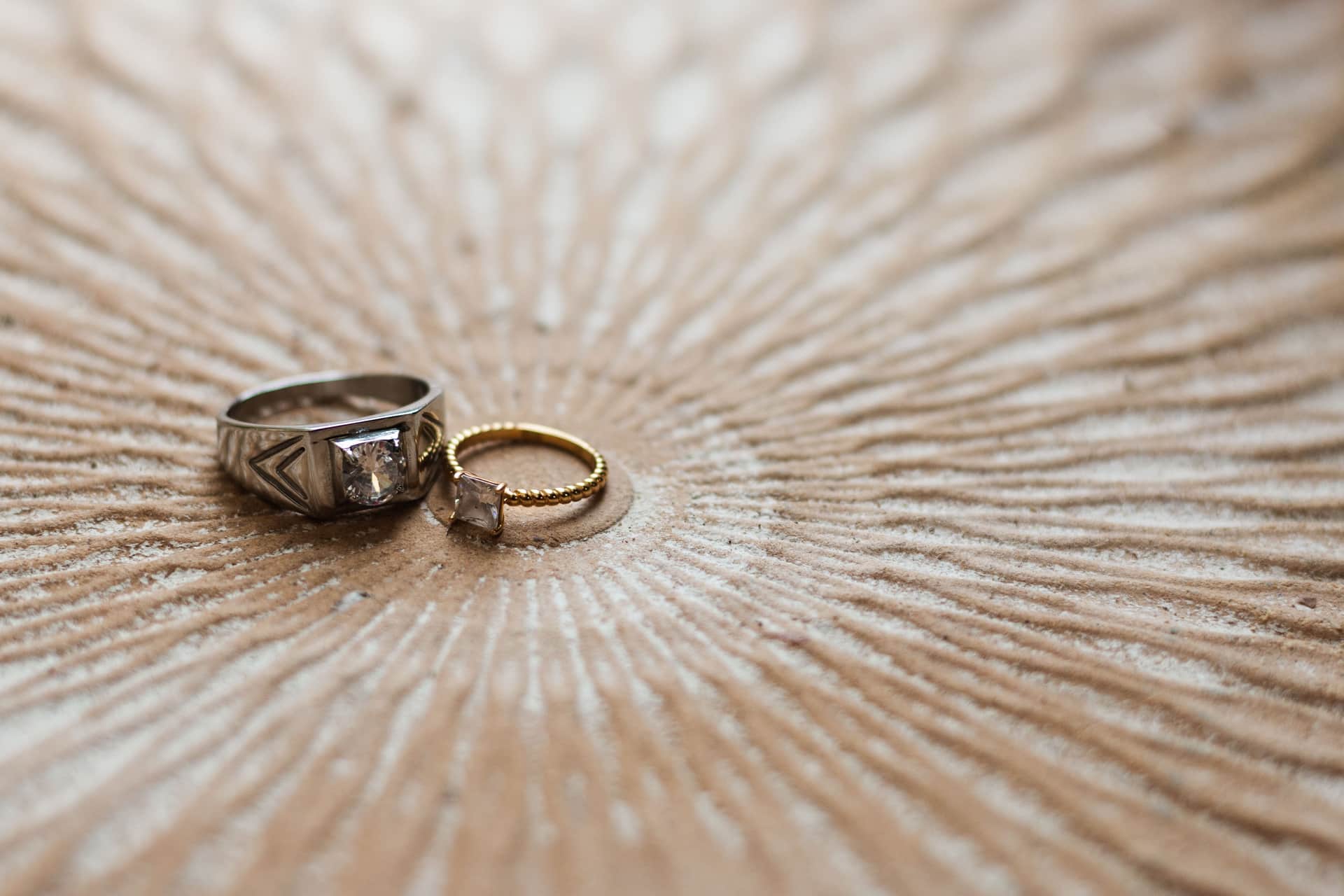
In rising order of how much gold you are actually buying: gold-plated (a coating typically well under one micron, applied to an unnamed base metal), gold vermeil (gold over sterling silver, and in the US it must be at least 2.5 microns thick to use the word), gold-filled (a bonded layer that must be at least 5% of the item’s total weight - roughly a hundred times the gold in typical plating), and solid gold (the karat describes the whole piece, not a surface).
Those four words describe products whose realistic lifespans differ by more than an order of magnitude, and they routinely sit next to each other in the same search results at similar prices. Knowing which one you are looking at is the single most valuable thing on this site.
Sterling silver, stainless steel and titanium are not coatings at all - they are solid metals, so nothing can wear through. Their differences are about tarnish, skin reaction and repairability. Sterling tarnishes but polishes back and can be repaired by any jeweler. Steel never tarnishes but usually cannot be resized or soldered. Titanium is the only one that is genuinely nickel-free when the listing names an ASTM grade, which is why it is the answer for reactive ears. The head-to-head that settles it for most people is sterling silver vs titanium.
We have not handled these pieces. What we do instead is compile the published material specifications, work out what a stated thickness means in months of daily wear against an explicit wear model, and cite the sources so you can check the arithmetic yourself. Where a listing does not publish a number, we say so rather than assuming a flattering one. That happens more often than you would like, and it is itself useful information: a seller who will not tell you the plating thickness is telling you something.
If you are trying to decode a specific listing, start with the three-way gold comparison. If your ears react to earrings, start with what “hypoallergenic” actually means - the word has no legal definition in the US and that is the whole problem. If you just want to know how long a cheap chain will last, the plating lifespan page has the arithmetic laid out step by step, with every assumption stated.
43 pages. Where a page ranks products, its current top pick and live price are shown here so you do not have to click through to find out what we recommend.
Best gold-filled starter chain
The three-way comparison with the FTC thresholds side by side. Start here if a listing has confused you.
Best gold-filled
Kooljewelry 14k Gold Filled Cable Chain Necklace
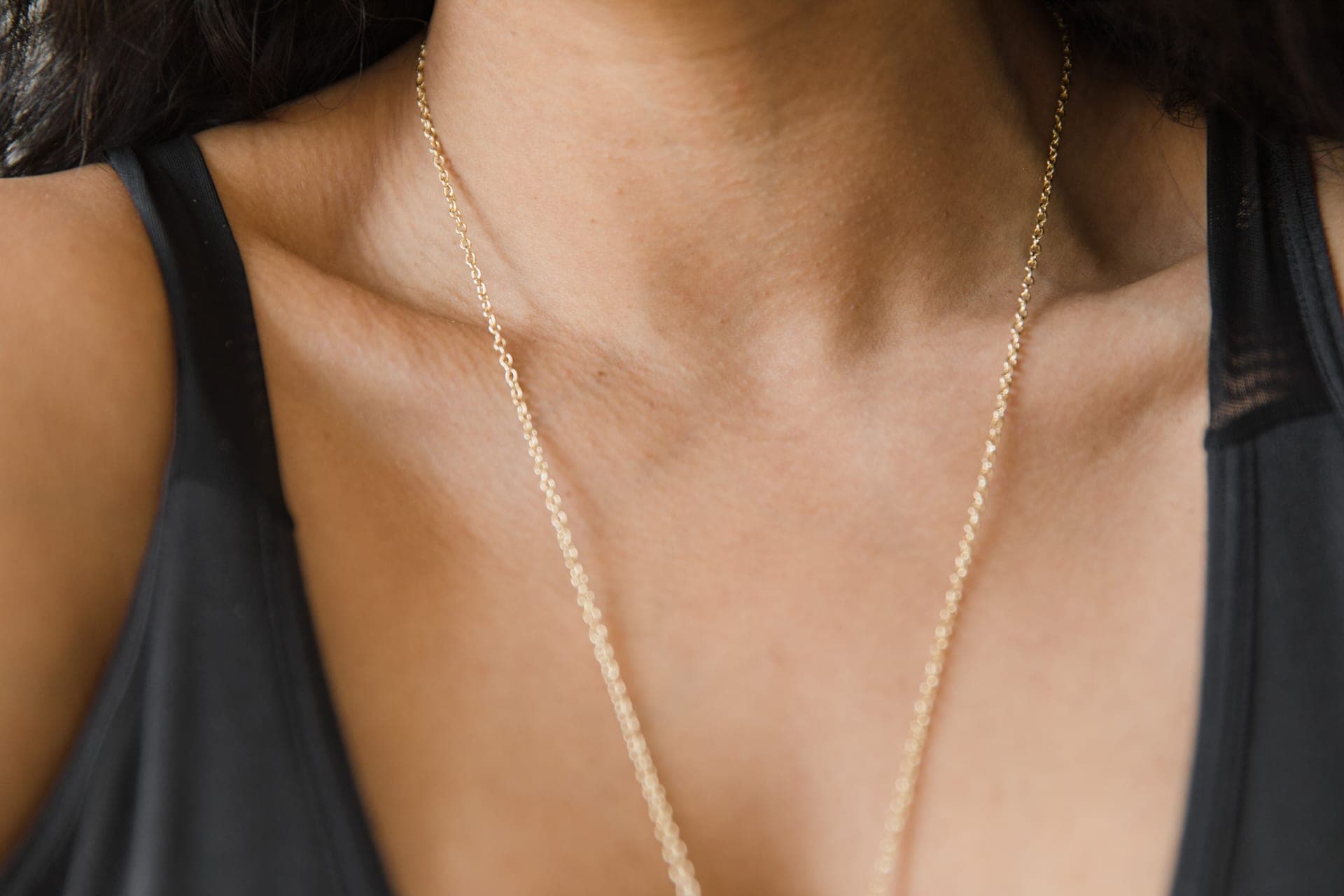
Best gold-filled chain
One is a bonded layer measured by weight, the other is a film measured in fractions of a micron. Ten times the life.
Best gold-filled
Kooljewelry 14k Gold Filled Cable Chain Necklace
Best gold-over-sterling
Gold-filled has more gold. Vermeil guarantees a sterling base. The right answer depends on why you are asking.
Longest-lasting gold
Kooljewelry 14k Gold Filled Cable Chain Necklace
Best solid-gold entry point
What the ten-to-twentyfold price gap actually buys - and the cases where gold-filled is the smarter purchase.

Best solid gold
Belacqua 1/2 Carat Lab-Grown Diamond Stud Earrings, 14K Yellow Gold
Best PVD-style plated pick
PVD is a tougher plating process, not more gold. Where that genuinely helps and where it does not.

Best plated-over-steel
14K Gold Plated 316L Stainless Steel Herringbone Necklace
Best solid-gold pick
18K is richer and gentler on skin. 14K is harder and cheaper. The right answer depends on the piece, not the number.
Best 14K
Belacqua 1/2 Carat Lab-Grown Diamond Stud Earrings, 14K Yellow Gold
Best solid-gold pick
Every karat mark converted to a percentage, with what the remaining alloy does to color, hardness and skin.
Best 14K piece
Belacqua 1/2 Carat Lab-Grown Diamond Stud Earrings, 14K Yellow Gold
Best gold-filled chain
The 1/20-by-weight threshold explained, and why it produces a decade of wear rather than a year.
Best starter chain
Kooljewelry 14k Gold Filled Cable Chain Necklace
Best gold-over-sterling
Gold over sterling silver, at least 2.5 microns thick. The sterling base is the point, not the gold.
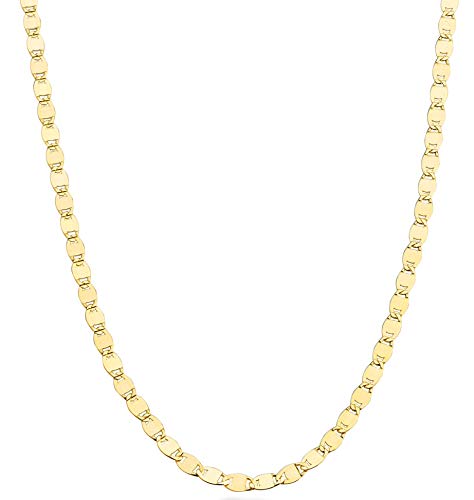
Best gold-over-sterling chain
Miabella Italian 925 Sterling Silver, 18Kt Gold Plated Mirror Link Necklace
Best plated construction
Why '18K gold plated' does not mean the item is 75% gold, and what the phrase is actually describing.
Best plated construction
14K Gold Plated 316L Stainless Steel Herringbone Necklace
Best long-life alternative
6-18 months on a daily chain, 3-9 on a ring, 2-5 years on earrings - with the full working shown.
Longest-lasting gold
Kooljewelry 14k Gold Filled Cable Chain Necklace
Best piece that holds value
The honest answer on scrap and resale, and what to buy instead if holding value is the point.
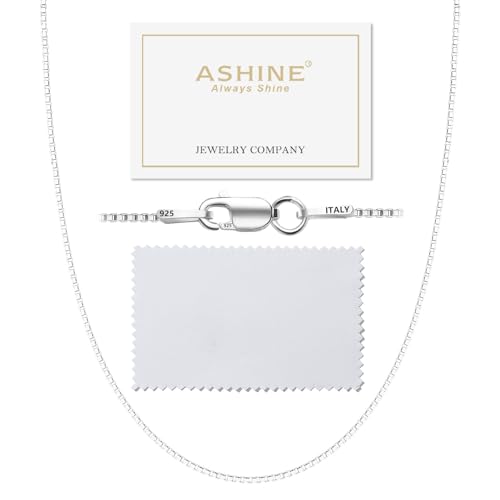
Best value-holding budget pick
ASHINE 925 Sterling Silver Box Chain Necklace, 1mm
Best non-tarnishing pick
Ranked picks where the base metal will not corrode when the plating goes, plus what 'non-tarnish' claims actually mean.
Best plated-over-steel
14K Gold Plated 316L Stainless Steel Herringbone Necklace
Best alternative to dipped gold
Why 'dipped' is a marketing word and 'plated' is a regulated one, with the micron thresholds that separate every tier.
Best lasting choice
Kooljewelry 14k Gold Filled Cable Chain Necklace
Best solid-metal chain
Two solid metals, no coatings. One tarnishes and can be repaired; the other does neither.

Best value
Monily Stainless Steel Cuban Link Chain, 3mm
Best solid sterling
Solid metal versus a coating - and why the price gap is far smaller than the durability gap.
Best sterling chain
ASHINE 925 Sterling Silver Box Chain Necklace, 1mm
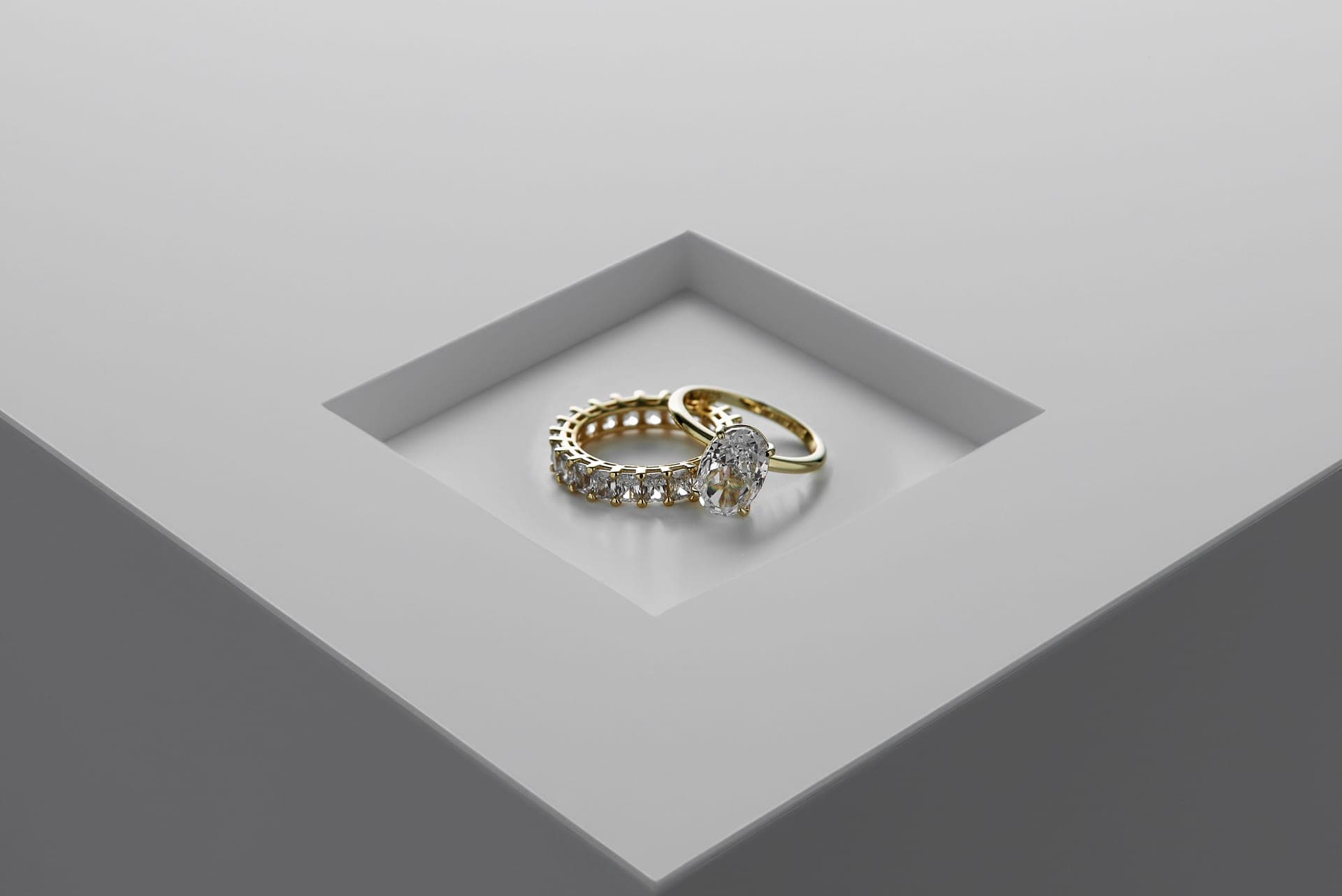
Best white-metal pick
Two white metals with two different maintenance schedules - and one costs about twenty times the other.
Best sterling
ASHINE 925 Sterling Silver Box Chain Necklace, 1mm

Best hypoallergenic pick
Titanium is nickel-free by specification. Sterling is warmer, repairable and worth something. Which matters is personal.

Best for reactive skin
Limerencia G23 Implant-Grade Titanium Stud Earrings, 20G
Best 925 pick
92.5% silver, the US legal threshold for 'sterling'. What the stamp does and does not guarantee.
Best plain sterling chain
ASHINE 925 Sterling Silver Box Chain Necklace, 1mm
Best-value sterling
Why sterling prices vary so wildly, what you are actually paying for, and how to spot a bad deal.
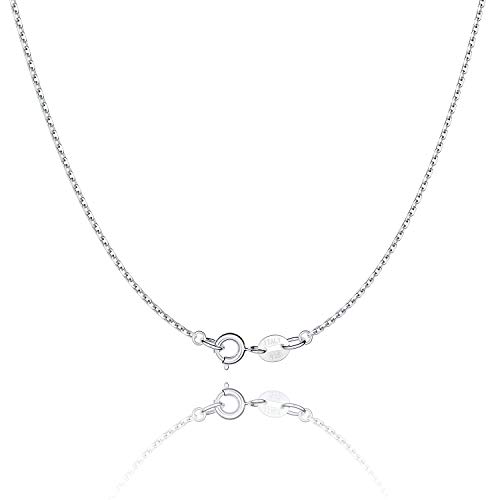
Best floor price
Jewlpire 925 Sterling Silver Cable Chain Necklace, 1.1mm
Best no-maintenance pick
No - it forms a self-repairing oxide layer. Plus the two situations where it can still discolour.

Best named grade
TenKa 316L Stainless Steel Cross Pendant Necklace
Best nickel-free pick
Yes, bound in the alloy. Why most people are fine with it and why some people are not.
Best nickel-free
Limerencia G23 Implant-Grade Titanium Stud Earrings, 20G
Best hypoallergenic pick
Both refuse to tarnish. One is nickel-free by specification, the other is cheaper and more available.
Best titanium
Limerencia G23 Implant-Grade Titanium Stud Earrings, 20G
Best named-grade steel
An unregulated phrase borrowed from a standard that specifies 14% nickel. What to read instead.

Best named-grade steel
316L Stainless Steel CZ Stud Earring Set, 6 Pairs

Best genuinely nickel-free pick
The word has no legal definition in the US. What to look for instead, and why it is checkable.
Best checkable claim
Limerencia G23 Implant-Grade Titanium Stud Earrings, 20G
Best metal for reactive ears
Every jewelry metal compared on nickel content, with the standards named where they exist.
Best overall
Limerencia G23 Implant-Grade Titanium Stud Earrings, 20G
Best for sensitive skin
Ears, necks and wrists all fail differently. What to buy for each, and what to stop buying entirely.
Best earrings
Limerencia G23 Implant-Grade Titanium Stud Earrings, 20G
Best hypoallergenic earrings
Ranked on named material standards - ASTM F136, G23, niobium - not on the marketing word.
Best overall
Limerencia G23 Implant-Grade Titanium Stud Earrings, 20G
Best titanium earrings
Implant-grade titanium picks with the ASTM grade named for each, ranked and priced live.
Best overall
Limerencia G23 Implant-Grade Titanium Stud Earrings, 20G
Best water-safe pick
Usually a coating over stainless steel. The steel is water-safe; the coating is not immortal.
Best truly waterproof
Monily Stainless Steel Cuban Link Chain, 3mm
Best everyday chain style
What each link style is, which are strong for their weight, and which ones kink permanently.
Best all-round
Kooljewelry 14k Gold Filled Cable Chain Necklace
Best gold tone for everyday wear
Both are the same karat of gold. Only one needs re-plating every few years - and the FTC requires that coating to be disclosed.
Best solid yellow gold
Belacqua 1/2 Carat Lab-Grown Diamond Stud Earrings, 14K Yellow Gold
Best honest white metal
Platinum is 950 parts per thousand pure to carry the word at all. White gold is plated and needs re-plating. What each costs you.
Best solid white metal
ASHINE 925 Sterling Silver Box Chain Necklace, 1mm
Best alternative to a plated finish
A platinum-group metal applied as a thin bright coating. The FTC requires it to be disclosed on precious metal - and it wears off.
Best unplated alternative
ASHINE 925 Sterling Silver Box Chain Necklace, 1mm

Best alternative to plated brass
A copper-zinc alloy, cheap and workable, and the default base metal beneath gold plating. The copper is why skin goes green.

What a plated listing looks like
Jewlpire 18k Gold Plated Cable Chain Necklace, 1.1mm
Best grade-stated titanium
What G23 actually designates, how it differs from G5 and commercially pure titanium, and how to verify the claim on a listing.
Best grade-stated pick
Limerencia G23 Implant-Grade Titanium Stud Earrings, 20G
Best gold-filled pick
A 1/20th-by-weight gold layer against solid corrosion-proof metal, compared on wear, water, skin and price.
Best gold-filled
Kooljewelry 14k Gold Filled Cable Chain Necklace
Best 316L-named pick
The marine-grade alloy behind the best steel jewelry: composition, what the L means, and how to tell a real claim from a vague one.
Best 316L claim
TenKa 316L Stainless Steel Cross Pendant Necklace
Best alternative-metal band
The two alternative-metal bands compared on published density, hardness and fracture toughness - plus the emergency-removal difference nobody mentions at the till.

Best overall
TIGRADE Titanium Plain Dome Polished Wedding Band
Best gold-filled everyday chain
How to read 14/20, 12/20 and 1/20 14K GF, what each number controls, and what an unstamped 'gold filled' listing is really telling you.
Best overall
Kooljewelry 14k Gold Filled Cable Chain Necklace
Best gold-filled starter chain
1/20 vs 1/40: the two bonded-gold tiers decoded, with what each mark means in years of wear.
Best gold-filled starter chain
Kooljewelry 14k Gold Filled Cable Chain Necklace
Best solid-gold studs
41.7% against 58.3% gold: what the karat difference does to color, hardness, reactions and price.
Best solid-gold studs
Belacqua 1/2 Carat Lab-Grown Diamond Stud Earrings, 14K Yellow Gold
Best gold-filled chain to actually keep
The 5%-by-weight arithmetic, what gold-filled is genuinely worth, and why no scrap figure appears here.

Best gold-filled chain to keep
14k Gold Filled Rope Chain Necklace, 20in
Every page in this hub links back to the material or stone explanation that justifies its recommendations, so you can check any claim one click away rather than trusting it. If you would rather see how the scoring works first, read the methodology.