Metals
Sterling Silver vs Stainless Steel
Both are solid metals with nothing to wear through. The choice is between a material that needs maintenance and one that cannot be repaired.
#ad — we earn a commission on qualifying Amazon purchases at no extra cost to you. How this site is funded. Prices are live and shown as of October 23, 2026.
The short answer
Sterling silver is 92.5% silver: it tarnishes, but polishes back and any jeweler can repair or resize it. Stainless steel never tarnishes and costs a fraction as much, but it cannot practically be resized or soldered. Neither has a coating to wear off.
What to buy
| # | Pick | Material | Score | Price |
|---|---|---|---|---|
| 1 |  Monily Stainless Steel Cuban Link Chain, 3mm Solid steel at under $8 - nothing to tarnish, nothing to wear off Top pick | Stainless steel cuban link, 3mm, silver tone. No plating claimed anywhere on the listing - the silver color is the steel itself.Best value | 8.8/10 | |
| 2 | 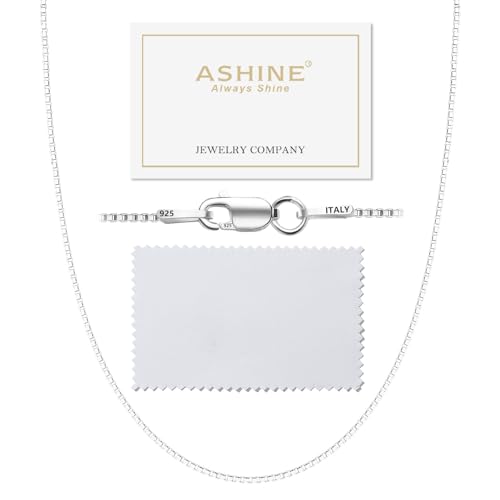 ASHINE 925 Sterling Silver Box Chain Necklace, 1mm Solid sterling with real residual value, and repairable by any jeweler | 925 sterling silver (92.5% silver, 7.5% other metals - usually copper). Solid metal throughout, not a coating.Best sterling | 8.5/10 | $22.49 - View on Amazon $25.99 13% off |
| 3 |  TenKa 316L Stainless Steel Cross Pendant Necklace 316L named explicitly - the marine-grade alloy, which most steel jewelry does not state | 316L stainless steel. 316L is the marine-grade alloy - the listing naming the grade is meaningful, because most steel jewelry does not.Best named steel grade | 8.6/10 | |
| 4 |  925 Sterling Silver Small Hoop Earrings, 3 Pairs Three sizes of solid sterling for the price of one plated pair | 925 sterling silver hoops in 8mm, 10mm and 12mm.Best sterling earrings | 8.6/10 |
What each one is
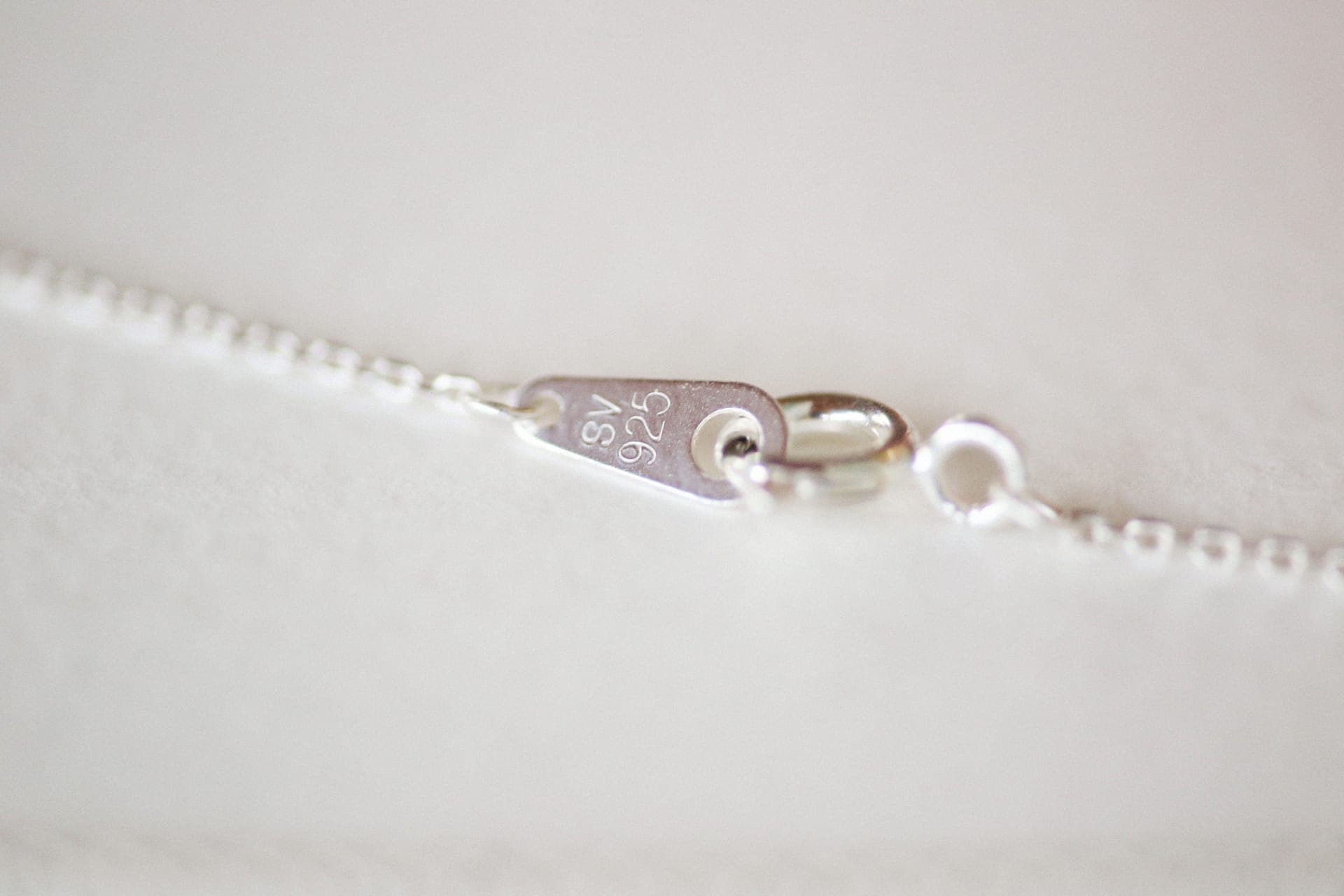
Sterling silver is at least 925 parts per thousand pure silver - that is what the FTC guides require before “sterling” or “solid silver” may be used. The remaining 7.5% is usually copper, added for hardness, and it is the copper that drives tarnish.
Stainless steel is an iron alloy with chromium, which forms a passive oxide layer that self-repairs when scratched. That layer is why steel does not rust or tarnish, and it is a property of the metal rather than a coating applied to it. If the choice you are actually making is against a gold-toned material rather than silver, the same reasoning is applied in gold filled vs stainless steel.
| Sterling silver | Stainless steel | |
|---|---|---|
| Composition | 92.5% silver, usually 7.5% copper | Iron, chromium, usually nickel |
| Tarnishes? | Yes - reversible with polishing | No |
| Coating to wear through? | None | None |
| Typical chain price | $15-60 | $7-25 |
| Repairable / resizable | Yes, by any jeweler | Rarely - difficult to solder |
| Scrap value | Real, against silver spot | None |
| Nickel content | Usually trace or none | Usually present, bound in the alloy |
| Weight and feel | Softer, warmer | Harder, cooler, heavier |
The maintenance question
Sterling tarnish is a surface reaction with airborne sulfur compounds. It is not damage - the metal is unchanged underneath and a treated cloth restores it in a minute. But it does keep happening, and how fast depends on your skin, your climate and where you store it.
The genuinely useful answer is storage, not polishing. Anti-tarnish strips in a closed box cost a few cents each and prevent most tarnish from occurring, which matters because every polish removes a microscopic layer of silver permanently. The aim is to need polish rarely, not to be good at it.
Steel needs none of this. That is its entire pitch, and it is a strong one for a piece you want to stop thinking about.
The repairability question
This is the trade in the other direction, and it is underrated. A sterling chain with a broken link, a bent clasp or a ring that no longer fits is a routine job for any jeweler. Sterling solders cleanly, resizes cleanly and can be melted and remade.
Steel largely cannot. Its hardness and its oxide layer make jewelry-scale soldering impractical, and most jewelers will decline steel work. A steel ring is the size it is, permanently. Buying steel means accepting that the piece is disposable in the long run - which, at these prices, is usually a fair trade.
Skin
Sterling is usually well tolerated: the alloy metal is normally copper, not nickel. Stainless steel almost always contains nickel bound in the alloy. Bound nickel releases very little, and most people wear steel with no trouble, but “very little” is not “none”.
If you have a diagnosed nickel allergy, neither of these is the right answer - implant-grade titanium is, because it is nickel-free by specification rather than by hope.
Which to buy, by piece
- Rings: steel if the size is settled and you want it indestructible; sterling if you might need it resized or engraved.
- Daily chains: steel, unless you want the warmer look of silver enough to polish it.
- Bracelets: steel. Wrists meet water, soap and desks constantly, and sterling tarnishes fastest there.
- Anything you will hand on: sterling. It can be repaired, remade and valued; steel cannot.
- Swimming and the gym: steel, without hesitation. Chlorine attacks sterling’s copper content.
Titanium is the third answer to the same question, and it beats both of these on one specific axis - the comparison is on sterling silver vs titanium.
Every pick in detail
What each one is actually made of, how long it realistically lasts in that material, who it is for and who should skip it.
1 · Best value
Monily Stainless Steel Cuban Link Chain, 3mm
Under $5 for a chain that will not tarnish, will not turn your skin green and has nothing to wear off. The cheapest genuinely durable item on this site.
- What it is
- Stainless steel cuban link, 3mm, silver tone. No plating claimed anywhere on the listing - the silver color is the steel itself.
- Realistic lifespan
- Effectively indefinite. Stainless does not tarnish and has no coating to wear off; the chain fails at the clasp long before the metal does.
- 3mm cuban
- stainless steel
- 24in
What works
- No coating means no coating failure - the honest advantage of steel
- Survives chlorine, salt water and sweat that would destroy sterling or plating
- Costs less than a jewelry cleaner
What does not
- Steel reads cooler and harder than silver up close; some people dislike the tone
- Cannot be resized or repaired by most jewelers - steel is difficult to solder
Skip it if: you have a nickel allergy and the listing does not state a nickel-free grade. Most stainless jewelry contains nickel in the alloy, bound but present.
#ad how we make money · price as of October 23, 2026
Best for a swim-in, shower-in, forget-about-it everyday chain. Score 8.8/10 from published specifications.
2 · Best sterling
ASHINE 925 Sterling Silver Box Chain Necklace, 1mm
Solid metal all the way through at $26. Tarnish is a chore, not a failure, and that is the trade sterling asks you to accept.
- What it is
- 925 sterling silver (92.5% silver, 7.5% other metals - usually copper). Solid metal throughout, not a coating.
- Realistic lifespan
- Indefinite as a material. Sterling tarnishes rather than wears away - a dark film you polish off, not a coating that thins. The chain outlives the finish, permanently.
- 1mm box
- 925 sterling
- solid metal
What works
- Solid material - nothing to wear through, ever
- Any tarnish is fully reversible with a cloth
- The 925 stamp is a checkable standard, unlike an unpublished plating thickness
What does not
- Will tarnish, and will tarnish faster on some people than others
- 1mm box chain is delicate for a pendant heavier than a few grams
Skip it if: you will not polish it. Sterling that is never cleaned goes gray and stays gray, and you will end up thinking it was cheap when it was just neglected.
Best for someone who would rather polish occasionally than replace annually. Score 8.5/10 from published specifications.
3 · Best named steel grade
TenKa 316L Stainless Steel Cross Pendant Necklace
The listing names 316L rather than saying 'stainless steel'. That specificity is worth more than the price difference.
- What it is
- 316L stainless steel. 316L is the marine-grade alloy - the listing naming the grade is meaningful, because most steel jewelry does not.
- Realistic lifespan
- Effectively indefinite. 316L is the grade used for surgical instruments and boat fittings precisely because it resists corrosion.
- 316L grade
- cross pendant
- bold
What works
- The steel grade is actually published - rare at this price
- 316L is the most corrosion-resistant common jewelry steel
What does not
- 316L still contains nickel, bound in the alloy - low-release, not nickel-free
- A bold pendant is a style commitment
Skip it if: you have a diagnosed nickel allergy. 316L releases very little nickel, but 'very little' is not 'none' - titanium is the zero option.
#ad how we make money · price as of October 23, 2026
Best for a pendant worn in salt water, chlorine or sweat without a second thought. Score 8.6/10 from published specifications.
4 · Best sterling earrings
925 Sterling Silver Small Hoop Earrings, 3 Pairs
Three sizes of solid sterling for $13. The pricing is the story.
- What it is
- 925 sterling silver hoops in 8mm, 10mm and 12mm.
- Realistic lifespan
- Indefinite as a material; tarnish is reversible. Sterling posts are also low-nickel by composition, though sterling is not certified nickel-free.
- 8/10/12mm
- 925 sterling
- 3 pairs
What works
- Solid sterling, three sizes, one order
- Small hoops are the most-worn earring style and the least likely to catch
What does not
- Sterling tarnishes, and tiny hoops are fiddly to polish
- Thin gauge means they bend if compressed in a bag
Skip it if: you have a confirmed nickel allergy that sterling still triggers. Sterling's alloy metals vary by maker, and only implant-grade titanium removes the question entirely.
#ad how we make money · price as of October 23, 2026
Best for an everyday hoop set in solid metal at a plated-jewelry price. Score 8.6/10 from published specifications.
Common questions
Is stainless steel better than sterling silver?
For durability and maintenance, yes - it does not tarnish and it is harder. For repairability, resale and skin friendliness, sterling wins. Neither is better overall; they are optimized for different things.
Does stainless steel jewelry turn skin green?
No. Green staining comes from copper reacting with sweat, and stainless steel contains no free copper. That is one of its genuine advantages over both brass-cored plated jewelry and, to a lesser degree, sterling.
Can you shower in sterling silver?
You can, but it accelerates tarnish - soap residue and moisture both help the reaction along. Steel does not care at all. If you never take jewelry off, steel is the material that suits the habit.
Is 925 silver worth more than stainless steel?
As material, yes - sterling has real scrap value against silver spot, and steel has none. As an object to wear and forget, steel often delivers more for less.
Sources
Every specification and figure on this page traces to one of these. Where a source does not publish a number, the page says so rather than estimating one.
- 16 CFR 23.5 - Misrepresentation as to silver content — 'Sterling' requires at least 925/1000ths pure silver; 'coin silver' at least 900/1000ths.
- 16 CFR 23.11 - Misuse of 'corrosion proof', 'rust resistant', etc. — Governs the durability claims routinely made in jewelry listings.
- 16 CFR Part 23 - Guides for the Jewelry, Precious Metals, and Pewter Industries — The full FTC Jewelry Guides, which govern every material claim quoted on this site.
Read next
- What 925 means
The sterling standard, and what the stamp does and does not guarantee.
- Does stainless steel tarnish?
The short answer and the two exceptions.
- Best jewelry under $50
The tier where both of these materials are routinely available.
- How to clean silver jewelry
Doing it without removing more silver than you have to.