Metals
What Is Rhodium Plated?
Rhodium plating is the reason white gold looks white and the reason 'non-tarnish' silver stops being non-tarnish. It is a coating, and coatings end.
#ad — we earn a commission on qualifying Amazon purchases at no extra cost to you. How this site is funded. Prices are live and shown as of October 5, 2026.
The short answer
Rhodium plating is a very thin layer of rhodium - one of the six platinum-group metals - electroplated onto another metal to make it bright white, hard-surfaced and tarnish-resistant. It is used on nearly all white gold and on much “non-tarnish” sterling silver. It is a coating: it thins with wear, and then it is gone.
What to buy
| # | Pick | Material | Score | Price |
|---|---|---|---|---|
| 1 | 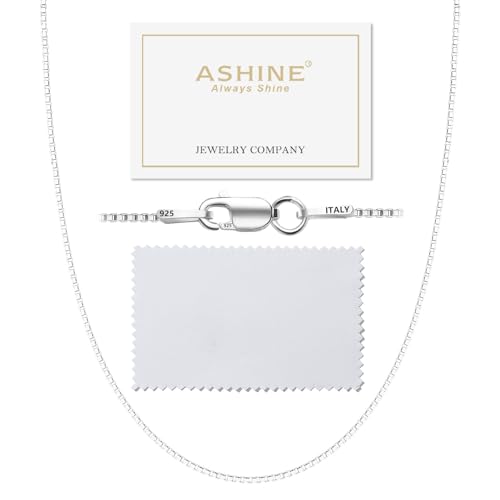 ASHINE 925 Sterling Silver Box Chain Necklace, 1mm Solid sterling with no plating at all - it tarnishes and polishes back, which is a reversible problem rather than a terminal one Top pick | 925 sterling silver (92.5% silver, 7.5% other metals - usually copper). Solid metal throughout, not a coating.Best unplated alternative | 8.5/10 | |
| 2 | 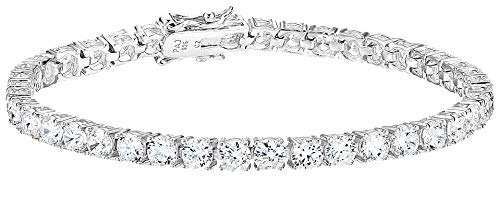 Amazon Essentials Platinum-Plated Sterling Silver CZ Tennis Bracelet, 4mm A plated white finish over solid sterling, named as plated: the right version of this construction, with the honest 2-5 year caveat | 925 sterling silver with a platinum plating, set with cubic zirconia. The plating is a thin white finish over solid sterling - the sterling is the substance, the platinum is the surface.Best plated-over-sterling | 7.9/10 | |
| 3 |  Purplepig Stackable CZ Eternity Band Ring Set Included as the counter-example this page argues against: marketed 'non-tarnish' with the base metal never named | Two-tone stackable eternity bands with cubic zirconia, marketed as non-tarnish. The listing does not name a base metal, so we cannot tell you what is under the finish.What to be careful of | 5.7/10 | $14.99 - View on Amazon $18.99 21% off |
What rhodium actually is
Rhodium is an element and a member of the platinum group - the six metals named together in the FTC Jewelry Guides as platinum, iridium, palladium, ruthenium, rhodium and osmium. It is harder than gold, extremely reflective, and does not tarnish or corrode under normal conditions.
Nobody makes solid rhodium jewelry. It is brittle and difficult to work, and it is one of the rarest and most volatile-priced metals traded. What it is used for is plating: a layer measured in fractions of a micron, applied electrolytically over another metal to give it rhodium's surface properties.
Where you have already encountered it
Three places, almost certainly:
- White gold. Gold alloyed with white metals is a pale grayish-cream, not the bright white of jewelry photography. Rhodium plating supplies the brightness. If you own white gold, you own rhodium.
- “Non-tarnish” or “anti-tarnish” sterling silver. Sterling tarnishes because its copper content reacts with airborne sulfur compounds. A rhodium layer physically separates the silver from the air, so the piece does not tarnish - until the layer wears through.
- White-finished costume jewelry. Rhodium, or a cheaper white alloy sold under similar language, over brass or another base metal.
The disclosure rule, which is unusually blunt
The FTC Jewelry Guides contain an entire section, 16 CFR 23.7, devoted to exactly this. It is one sentence: it is unfair or deceptive to fail to disclose a surface-layer application of rhodium on products marked or described as precious metal.
That the regulator thought it worth a dedicated section tells you how material the fact is to a buyer. A rhodium-plated sterling ring and a solid sterling ring look identical in a photograph and behave completely differently over five years. You are entitled to know which one you are buying, and a listing that is silent on the point while describing the piece as silver or gold is not meeting the standard.
How long it lasts
| Where it is | What rubs it | Realistic behavior |
|---|---|---|
| Ring shank | Everything the hand touches | The fastest wear point in all of jewelry |
| Bracelet clasp and edges | Sleeves, desks, the other wrist | Thins at raised edges first |
| Necklace clasp | The back of the neck, collars | Wears at the clasp long before the chain |
| Earring stud | Almost nothing | Lasts far longer than anywhere else |
| Pendant face | Clothing only | Slow, even wear |
The pattern to take away is that rhodium plating is not a property of the piece - it is a property of the piece and where it is worn. The same plating thickness that disappears from a ring in a year can survive a decade in an earlobe. Anyone quoting a single lifespan for “rhodium plating” is skipping the only variable that matters.
Re-plating: cost, and when it is worth it
Re-plating is routine jeweler work. The piece is cleaned, any remaining plating is removed, the surface is polished and a fresh rhodium layer is applied. It is not a repair and it does not damage the piece.
Whether it is worth doing is a simple arithmetic question, and the answer is usually about what is underneath:
- Solid gold or platinum underneath: re-plate. The piece is worth more than the service, indefinitely.
- Solid sterling underneath: judgment call. Often the better move is to let the plating go and treat the piece as the sterling it is - polish it occasionally and accept a slightly warmer white.
- Unnamed base metal underneath: do not. Re-plating a costume piece usually costs more than the piece, and you are paying a jeweler to resurface brass.
That last case is the one that matters most for jewelry bought on Amazon, and it is why we score listings down when the base metal is not stated. The whole value of the plating question depends on knowing what the plating sits on, and the FTC guides, which cover precious metals and their imitations, do not require a seller to tell you.
Rhodium, palladium, platinum: which white coating is which
Rhodium is the usual white plating but not the only one, and the names get used loosely in listings. The FTC Jewelry Guides name six platinum-group metals - platinum, iridium, palladium, ruthenium, rhodium and osmium - and three of them turn up as jewelry finishes.
Rhodium is the brightest and hardest of the three as a surface, which is why it became the standard for white gold. It is also the most expensive by weight and the most volatile in price, so plating thickness is where manufacturers economize - two pieces both honestly described as rhodium-plated can differ several times over in how long the finish lasts, and no listing publishes the number.
Palladium plating is slightly warmer and softer than rhodium, and palladium is also used inside white gold alloys as the whitening metal instead of nickel. That is the distinction worth holding onto: palladium in the alloy is a reason a white gold piece may suit reactive skin; palladium as a plating is just another coating with a lifespan.
Platinum plating exists and appears in the budget tier over sterling silver. Under 16 CFR 23.6 a platinum coating may only be described as platinum if the wording makes clear the product is coated, and the coating has to be of reasonable durability across all significant surfaces. A listing saying “platinum” without the word plated, on a piece priced in double digits, is not describing solid platinum - the thresholds are on platinum vs white gold.
For a buyer, the practical upshot is that the identity of the white coating matters much less than two other facts: whether the listing admits there is a coating at all, and what metal is underneath it. A bright white finish tells you nothing about either.
Rhodium plating and sensitive skin
Rhodium itself is not a common contact allergen, and while a rhodium layer is intact it acts as a physical barrier between your skin and whatever is underneath. That is genuinely useful - and it is also why a piece can be comfortable for a year and then start irritating. The plating has thinned, and the alloy beneath, which may contain nickel, is now in contact with skin.
If you have a confirmed metal sensitivity, this is the wrong strategy to rely on. A barrier with an expiry date is not a solution; a material that contains nothing you react to is. The specifications that actually deliver that are on best metal for sensitive ears and what hypoallergenic really means.
Every pick in detail
What each one is actually made of, how long it realistically lasts in that material, who it is for and who should skip it.
1 · Best unplated alternative
ASHINE 925 Sterling Silver Box Chain Necklace, 1mm
Solid metal all the way through at $26. Tarnish is a chore, not a failure, and that is the trade sterling asks you to accept.
- What it is
- 925 sterling silver (92.5% silver, 7.5% other metals - usually copper). Solid metal throughout, not a coating.
- Realistic lifespan
- Indefinite as a material. Sterling tarnishes rather than wears away - a dark film you polish off, not a coating that thins. The chain outlives the finish, permanently.
- 1mm box
- 925 sterling
- solid metal
What works
- Solid material - nothing to wear through, ever
- Any tarnish is fully reversible with a cloth
- The 925 stamp is a checkable standard, unlike an unpublished plating thickness
What does not
- Will tarnish, and will tarnish faster on some people than others
- 1mm box chain is delicate for a pendant heavier than a few grams
Skip it if: you will not polish it. Sterling that is never cleaned goes gray and stays gray, and you will end up thinking it was cheap when it was just neglected.
#ad how we make money · price as of October 5, 2026
Best for someone who would rather polish occasionally than replace annually. Score 8.5/10 from published specifications.
2 · Best plated-over-sterling
Amazon Essentials Platinum-Plated Sterling Silver CZ Tennis Bracelet, 4mm
A real sterling tennis bracelet with a white-metal finish, for the price of a plated-brass one. When the finish goes you still own the silver.
- What it is
- 925 sterling silver with a platinum plating, set with cubic zirconia. The plating is a thin white finish over solid sterling - the sterling is the substance, the platinum is the surface.
- Realistic lifespan
- The sterling is indefinite. The platinum plating is a thin surface layer that thins at the clasp and edges over roughly 2-5 years of regular wear, at which point the sterling beneath shows through and tarnishes normally.
- 4mm CZ
- 925 sterling
- platinum plated
What works
- Sterling underneath means the plating wearing off is cosmetic, not terminal
- Platinum plating resists tarnish while it lasts, which sterling alone does not
What does not
- The plating will eventually wear at the clasp - plan on it
- CZ clouds with wear like all CZ
Skip it if: you expect a permanent white finish. Nothing plated is permanent; solid white gold or platinum is, at fifty times the price.
#ad how we make money · price as of October 5, 2026
Best for the diamond-tennis look with a base material worth keeping. Score 7.9/10 from published specifications.
3 · What to be careful of
Purplepig Stackable CZ Eternity Band Ring Set
A cheap, good-looking stack. The material is undeclared, which matters more on a ring than anywhere else.
- What it is
- Two-tone stackable eternity bands with cubic zirconia, marketed as non-tarnish. The listing does not name a base metal, so we cannot tell you what is under the finish.
- Realistic lifespan
- Not publishable. Rings take the hardest life of any jewelry - keys, gym bars, washing up - so an unnamed base metal under a finish is a real unknown here.
- stackable set
- CZ eternity
- base metal not stated
What works
- A full coordinated stack for the price of one ring elsewhere
- Two-tone means it works with both silver and gold pieces
What does not
- No stated base metal - the single most important spec on a ring
- 'Non-tarnish' is a marketing claim here, not a material specification
Skip it if: your fingers react to costume jewelry. Buy the sterling eternity band instead and know what is touching your skin.
Best for a low-stakes stack you are happy to replace. Score 5.7/10 from published specifications.
Common questions
Is rhodium plated jewelry good quality?
The plating is a good finish - bright, hard and tarnish-resistant. Its quality tells you nothing about the piece, because quality lives in what is underneath. Rhodium over solid gold is excellent. Rhodium over an unnamed base metal is costume jewelry with a nice surface.
Does rhodium plating wear off?
Yes, always, and the speed depends entirely on where it is worn. A ring shank is the fastest wear point in jewelry; an earring stud is the slowest. When it thins you see the warmer or darker metal underneath, which on white gold reads as the piece yellowing.
Does rhodium plated silver tarnish?
Not while the plating is intact - that is the point of it. Once the layer wears through, the sterling underneath is exposed to air and tarnishes normally, often patchily, which looks worse than even tarnish. Cleaning it is on how to clean silver jewelry.
Does rhodium contain nickel?
No. Rhodium is an element, not an alloy, so there is no nickel in the rhodium itself and it is not a common allergen. The nickel risk comes from the metal underneath, which the plating hides from your skin only for as long as it lasts.
Sources
Every specification and figure on this page traces to one of these. Where a source does not publish a number, the page says so rather than estimating one.
- 16 CFR 23.7 - Disclosure of surface-layer application of rhodium — One sentence long: it is unfair or deceptive to fail to disclose a surface-layer application of rhodium on products marked or described as precious metal.
- 16 CFR 23.6 - Misuse of the words 'platinum', 'iridium', 'palladium', 'ruthenium', 'rhodium' and 'osmium' — Names the six platinum-group metals and sets the thresholds: 950 parts per thousand pure platinum to be called 'platinum' unqualified, 850/900/950 for a numbered mark, and a 500 ppt floor below which the word may not be used at all.
- 16 CFR 23.0 - Scope and application of the FTC Jewelry Guides — The guides cover precious metals (gold, silver, platinum group), precious metal alloys and their imitations. Base metals under a coating are not themselves an 'industry product' requiring disclosure - which is why a listing can be silent about what the plating sits on.
- 16 CFR 23.5 - Misrepresentation as to silver content — 'Sterling' requires at least 925/1000ths pure silver; 'coin silver' at least 900/1000ths.
- 16 CFR 23.11 - Misuse of 'corrosion proof', 'rust resistant', etc. — Governs the durability claims routinely made in jewelry listings.
- 16 CFR Part 23 - Guides for the Jewelry, Precious Metals, and Pewter Industries — The full FTC Jewelry Guides, which govern every material claim quoted on this site.
Read next
- White gold vs yellow gold
Why white gold is the main place rhodium shows up, and what happens when it wears.
- Platinum vs white gold
The platinum-group metal in its solid form, and the purity rules it answers to.
- What gold plated means
The same coating logic in gold, with the micron thresholds.
- How to clean plated jewelry
Cleaning anything with a coating on it, without taking the coating off.