Metals
What Is Platinum Plated?
Platinum-plated jewelry is not platinum jewelry. It is a thin white surface over something else - and what that something else is decides whether the piece is worth buying.
#ad — we earn a commission on qualifying Amazon purchases at no extra cost to you. How this site is funded. Prices are live and shown as of November 8, 2026.
The short answer
Platinum plated means a very thin layer of platinum-group metal electroplated over a different metal, almost always sterling silver or brass. It is a surface, not a composition: under the FTC Jewelry Guides an article can only be called platinum if the metal itself is at least 850 parts per thousand pure, and a plated piece is nowhere near that. Buy platinum-plated sterling; avoid platinum-plated brass.
What to buy
| # | Pick | Material | Score | Price |
|---|---|---|---|---|
| 1 | 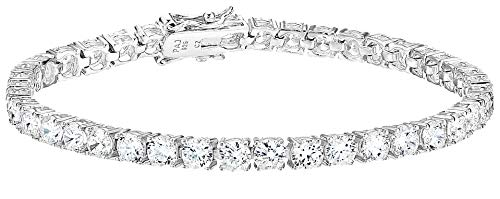 Amazon Essentials Platinum-Plated Sterling Silver CZ Tennis Bracelet, 4mm The construction done right: a thin white platinum finish over solid 925, so when the finish eventually thins you still own sterling silver Top pick | 925 sterling silver with a platinum plating, set with cubic zirconia. The plating is a thin white finish over solid sterling - the sterling is the substance, the platinum is the surface.Best platinum-plated piece | 7.9/10 | |
| 2 |  Amazon Essentials Platinum-Plated Sterling Silver CZ Stud Earrings The same honest construction in the cheapest format it comes in - platinum-plated sterling settings rather than plated brass ones | Cubic zirconia in platinum-plated 925 sterling silver. CZ is a synthetic stone in its own right - not a fake diamond, a different stone with different properties.Best cheap platinum-plated | 7.8/10 | |
| 3 | 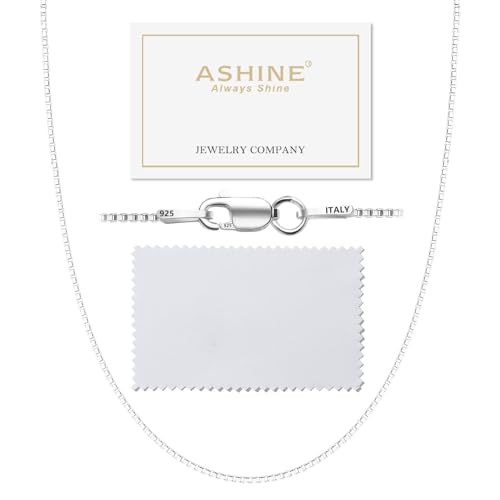 ASHINE 925 Sterling Silver Box Chain Necklace, 1mm Solid 925 with no coating at all - it tarnishes and polishes back, which is a one-minute chore rather than a finish with an end date | 925 sterling silver (92.5% silver, 7.5% other metals - usually copper). Solid metal throughout, not a coating.Best unplated alternative | 8.5/10 | |
| 4 | 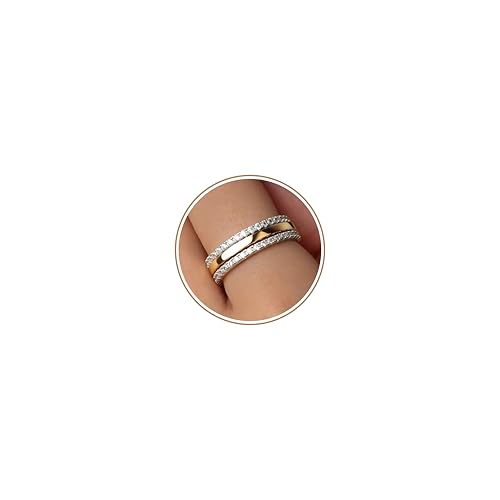 Purplepig Two-Tone Stackable CZ Eternity Band Set, 3 Rings The counter-example: a named plating over brass, which is the version of this construction where the finish wearing through is terminal rather than cosmetic | Three thin bands - two silver-tone CZ eternity bands and one plain gold-tone band - marketed as non-tarnish. The listing does name the construction, and it is worth reading carefully: brass, with sterling silver plating on the silver bands and 14K gold plating on the gold one. The metal you can see is a coating. The metal you own is brass.What to watch for | 6.3/10 |
The short definition
Platinum plating is a coating. A piece of jewelry made of some other metal - sterling silver, brass, base-metal alloy - is put through an electroplating bath and comes out with a microscopically thin layer of platinum-group metal bonded to its surface. The result looks bright, cool and white, resists tarnish while the layer is intact, and contains an almost immeasurably small quantity of actual platinum.
That is genuinely different from the three things people confuse it with: solid platinum (an article whose metal is platinum), white gold (a gold alloy, usually itself rhodium plated), and sterling silver (an article whose metal is 92.5% silver). Only the first of those is a platinum item.
What the word “platinum” is allowed to mean
Platinum is one of six metals named together in the FTC Jewelry Guides - platinum, iridium, palladium, ruthenium, rhodium and osmium, collectively the platinum group. The relevant section, 16 CFR 23.6, sets thresholds measured on the metal in the article:
- 950 parts per thousand pure platinum for an article to be described as “platinum” with no qualification at all.
- 850, 900 or 950 parts per thousand for the corresponding numbered quality marks.
- A 500 parts-per-thousand floor below which the word may not be used to describe the article at all.
The same section also handles coatings directly, and this is the part worth knowing before you read another listing: a platinum coating may only be described as platinum where the wording makes clear that the product is coated, and the coating has to be of reasonable durability across all significant surfaces. So “platinum plated” is a permissible description and “platinum” on its own, on a plated piece, is not.
Read the thresholds as composition thresholds, because that is what they are: they are about what the article is made of. A plated ring is not 850 parts per thousand platinum by any measure - the coating is a fraction of a percent of the object's weight. So when a listing says “platinum plated,” the honest reading is that the word is describing the color and the surface, and the piece's actual metal is whatever is named next to it. That is why the single most useful thing you can do with one of these listings is stop reading the word platinum and go looking for the base metal.
Why sellers plate with platinum at all
There are two real reasons and one commercial one, and it is worth separating them.
The real reasons: platinum-group metals are hard, bright white and chemically inert, so a thin layer of one makes a sterling silver piece look whiter than silver and - while the layer lasts - stops it tarnishing. Silver tarnishes because the copper in the sterling alloy reacts with sulfur compounds in air and on skin; a platinum-group surface puts an unreactive barrier between the two. On a piece with a lot of surface area and a lot of small settings, like a tennis bracelet, that barrier is genuinely useful.
The commercial reason: “platinum” is the most expensive-sounding word available in white metal. Platinum is benchmarked by weight on an open market - the LBMA runs separate published benchmarks for platinum and palladium alongside gold - which is exactly why solid platinum jewelry is expensive and why no amount of plating gets you near it. Putting the word on a cheap white piece borrows the association for the price of a chemical bath. It is not fraud, and the better listings are quite open about it. It is just not what a shopper skim-reading the title takes from it.
Platinum plated vs the finishes it sits next to
| Finish or metal | What it actually is | Life of the finish | What you own underneath |
|---|---|---|---|
| Solid platinum | An article of 850-950ppt platinum metal | Permanent - there is no finish | Platinum |
| Platinum-plated sterling | Thin PGM layer over solid 925 | Roughly 2-5 years of wear | Sterling silver |
| Platinum-plated brass | Thin PGM layer over copper-zinc alloy | Months to ~2 years | Brass |
| Rhodium-plated sterling | Thin rhodium layer over solid 925 | Roughly 1-3 years on rings, longer elsewhere | Sterling silver |
| White gold | A gold alloy, normally rhodium plated on top | Replate every few years | Solid gold |
| Solid sterling, unplated | 92.5% silver, no coating at all | No finish to lose | Sterling silver |
Two rows are worth more than a table cell. The rhodium row is the closest relative to this page's subject, and the FTC treats it differently in one specific way: 16 CFR 23.7 is a single sentence saying it is deceptive to fail to disclose a surface-layer application of rhodium on a product marked or described as precious metal. Rhodium is the finish on almost all white gold and much “non-tarnish” silver, and we cover it separately in what rhodium plated means. In practice the two finishes behave almost identically on your wrist - the difference that matters to a buyer is not rhodium versus platinum, it is what sits underneath.
The solid sterling, unplated row is the one most people skip, and it is frequently the right answer. An unplated sterling piece has no finish, which means it cannot have a finish failure. It tarnishes instead - and tarnish is reversible in a minute with a cloth, where a worn-through plating is not reversible at all outside a plating workshop. Choosing between them is a choice between a small recurring chore and a finish with an end date.
The base metal is the whole question
Here is the decision rule, and it is short enough to use in a shop. Because the plating is temporary on everything, the only durable thing you are buying is what the plating sits on. So:
- “Platinum-plated sterling silver” / “platinum over 925” - a good buy. The sterling is the substance and the platinum is the surface. When the white layer eventually thins at the clasp and the edges, what shows through is silver, which tarnishes and polishes back. The finish failing is cosmetic.
- “Platinum plated” with no base metal named - assume brass or an unnamed base alloy, because sellers with sterling underneath say so. Note that the FTC guides cover precious metals and their imitations; a base metal under a coating is not itself an industry product requiring disclosure, which is exactly why a listing can legally say nothing about what is underneath (16 CFR 23.0).
- “Platinum-plated brass” - a look, bought knowingly. Brass is a copper-zinc alloy, and copper against damp skin is what produces the green mark people mistake for an allergy (why jewelry turns skin green). Here the finish failing is terminal, not cosmetic.
That rule is the same one this site applies to gold, and for the same reason - the full version of the argument is in sterling silver vs silver plated, and the purity standard the good answer rests on is decoded in what 925 actually means.
How long a platinum-plated finish lasts
Nobody publishes the number, and that is the honest starting point: unlike gold plate, where the FTC guides set a minimum thickness that makes the claim legal, platinum-plating thicknesses are simply not stated on consumer listings. What we can say is what the wear pattern looks like, because it is the same on every plated piece:
- Earrings last longest. Studs barely touch anything. A platinum-plated sterling stud can keep its finish for many years, and the stone usually gives up first.
- Bracelets and necklaces are mid-range. Expect the finish to thin first at the clasp and on the edges of links, where the metal is handled and rubs against itself - roughly a two-to-five-year horizon with regular wear.
- Rings are the worst case, by a long way. A ring is clamped around a moving joint on a hand that meets every hard surface of your day. On a ring, treat any plating as a finish measured in months to a couple of years.
None of that is a defect. It is what a coating measured in fractions of a micron does. The mistake is not buying plated - it is buying plated while believing it is permanent, and then feeling cheated at the two-year mark.
What to buy, and what to buy instead
The CZ tennis bracelet in our picks is the construction at its best: a real sterling bracelet with a white finish, at the price plated-brass versions ask. It is the piece that makes the case for platinum-plated sterling, and the rest of the format is ranked in best tennis bracelets. The matching studs are the same logic in the cheapest possible format - sterling settings rather than brass ones, for a few dollars more than the plated-brass studs they sit next to.
If you would rather own the metal than the finish, the unplated sterling box chain is the answer: no coating, no end date, and a polishing cloth instead. If you want a white metal that never needs a finish at all, the comparison you actually want is platinum vs white gold - and the cheaper white options are set against sterling in sterling silver vs white gold. For rings specifically, where plating has the shortest life of anywhere on the body, start from solid metal: best sterling silver rings.
Caring for a platinum-plated piece
Plated finishes are thin, so the rules are about not removing them. Do not use abrasive silver polish or a polishing cloth impregnated with compound on a plated surface - those work by taking a microscopic layer off, and on a plated piece the layer they take is the plating. Use warm water, a drop of mild dish soap and a soft brush, and dry it properly. Keep it out of chlorinated pools and off during cleaning jobs, because what creeps under the edges of a coating is what lifts it.
When the finish does go, there are three honest options: live with it (on sterling underneath, the exposed metal just tarnishes and polishes like any silver), have the piece replated by a jeweler, or replace it. On an inexpensive piece, replating usually costs more than the piece did - which is a fact about plated jewelry in general rather than about this finish. The polishing rules for the metal underneath are in how to clean silver jewelry, and the same wear timeline for gold finishes is in how long gold plating actually lasts.
The honest summary
Platinum plated is a legitimate construction described with a borrowed word. It buys you a whiter, temporarily tarnish-proof surface on a piece made of something else, and it is worth paying a small premium for when the something else is sterling silver. It is worth nothing when the something else is unnamed, because then you are buying a coating over a question mark. And it is never, at any price, platinum jewelry - that is a different product with a metal cost floor underneath it, and the gap between the two is the entire reason the phrase exists.
Every pick in detail
What each one is actually made of, how long it realistically lasts in that material, who it is for and who should skip it.
1 · Best platinum-plated piece
Amazon Essentials Platinum-Plated Sterling Silver CZ Tennis Bracelet, 4mm
A real sterling tennis bracelet with a white-metal finish, for the price of a plated-brass one. When the finish goes you still own the silver.
- What it is
- 925 sterling silver with a platinum plating, set with cubic zirconia. The plating is a thin white finish over solid sterling - the sterling is the substance, the platinum is the surface.
- Realistic lifespan
- The sterling is indefinite. The platinum plating is a thin surface layer that thins at the clasp and edges over roughly 2-5 years of regular wear, at which point the sterling beneath shows through and tarnishes normally.
- 4mm CZ
- 925 sterling
- platinum plated
What works
- Sterling underneath means the plating wearing off is cosmetic, not terminal
- Platinum plating resists tarnish while it lasts, which sterling alone does not
What does not
- The plating will eventually wear at the clasp - plan on it
- CZ clouds with wear like all CZ
Skip it if: you expect a permanent white finish. Nothing plated is permanent; solid white gold or platinum is, at fifty times the price.
#ad how we make money · price as of November 8, 2026
Best for the diamond-tennis look with a base material worth keeping. Score 7.9/10 from published specifications.
2 · Best cheap platinum-plated
Amazon Essentials Platinum-Plated Sterling Silver CZ Stud Earrings
The honest baseline CZ stud. Cheap, sparkly, and it will go slightly milky in a few years - which at this price is fine.
- What it is
- Cubic zirconia in platinum-plated 925 sterling silver. CZ is a synthetic stone in its own right - not a fake diamond, a different stone with different properties.
- Realistic lifespan
- CZ is Mohs 8-8.5 and clouds with surface abrasion over roughly 2-5 years of daily wear. That is CZ working as designed, not failing. The sterling setting is indefinite.
- Mohs 8-8.5
- 925 sterling
- platinum plated
What works
- Sterling settings rather than plated brass
- Cheap enough that the 2-5 year stone life is genuinely acceptable value
What does not
- CZ clouds. Every CZ clouds. Nobody selling CZ mentions this
- Platinum plating on the setting wears at the same time
Skip it if: you want to buy studs once. Moissanite costs several times more and holds its surface for decades - that is the actual trade.
#ad how we make money · price as of November 8, 2026
Best for everyday sparkle you replace every few years without thinking about it. Score 7.8/10 from published specifications.
3 · Best unplated alternative
ASHINE 925 Sterling Silver Box Chain Necklace, 1mm
Solid metal all the way through at $26. Tarnish is a chore, not a failure, and that is the trade sterling asks you to accept.
- What it is
- 925 sterling silver (92.5% silver, 7.5% other metals - usually copper). Solid metal throughout, not a coating.
- Realistic lifespan
- Indefinite as a material. Sterling tarnishes rather than wears away - a dark film you polish off, not a coating that thins. The chain outlives the finish, permanently.
- 1mm box
- 925 sterling
- solid metal
What works
- Solid material - nothing to wear through, ever
- Any tarnish is fully reversible with a cloth
- The 925 stamp is a checkable standard, unlike an unpublished plating thickness
What does not
- Will tarnish, and will tarnish faster on some people than others
- 1mm box chain is delicate for a pendant heavier than a few grams
Skip it if: you will not polish it. Sterling that is never cleaned goes gray and stays gray, and you will end up thinking it was cheap when it was just neglected.
#ad how we make money · price as of November 8, 2026
Best for someone who would rather polish occasionally than replace annually. Score 8.5/10 from published specifications.
4 · What to watch for
Purplepig Two-Tone Stackable CZ Eternity Band Set, 3 Rings
A cheap, good-looking stack, and the listing is honest enough to say it is plated brass. Price it as a season or two, not as jewelry you keep.
- What it is
- Three thin bands - two silver-tone CZ eternity bands and one plain gold-tone band - marketed as non-tarnish. The listing does name the construction, and it is worth reading carefully: brass, with sterling silver plating on the silver bands and 14K gold plating on the gold one. The metal you can see is a coating. The metal you own is brass.
- Realistic lifespan
- Plating on a ring is the shortest-lived finish in jewelry. Rings take the hardest life of anything you wear - keys, gym bars, washing up - and at under 2g a band there is very little plating to lose. Plan on 6 months to 2 years before the high points go back to brass.
- 3-ring set
- plated brass
- AAAAA CZ
What works
- A full coordinated stack for the price of one ring elsewhere
- Two-tone means it works with both silver and gold pieces
- The base metal is actually named, which is more than most listings in this tier manage
What does not
- Brass under the plating - when the coating wears through on a ring, brass is what meets your finger
- 'Non-tarnish' is a marketing claim here, not a material specification: the plating does not tarnish, and then it is not there
- Nickel-free and 'no green discoloration' are claimed without naming a standard, so neither is checkable
Skip it if: your fingers react to costume jewelry. Buy the sterling eternity band instead, where the metal goes all the way through.
#ad how we make money · price as of November 8, 2026
Best for a low-stakes stack you are happy to replace. Score 6.3/10 from published specifications.
Common questions
Is platinum-plated jewelry real platinum?
The coating is a real platinum-group metal, but the article is not platinum. Under the FTC Jewelry Guides an item can only be described as platinum if the metal itself is at least 850 parts per thousand pure, and the plating on a piece of jewelry is a fraction of a percent of its weight. Treat “platinum plated” as a description of the surface and go looking for the base metal.
Does platinum-plated jewelry tarnish?
Not while the plating is intact - platinum-group metals are chemically inert, which is the main practical reason the finish is applied to silver. Once the layer thins at the clasp or edges, the metal underneath behaves normally: sterling silver tarnishes and polishes back, brass can leave a green mark on skin.
How long does platinum plating last?
Thicknesses are not published, so judge by placement rather than by a number. Earrings can hold their finish for many years, bracelets and chains typically run two to five years of regular wear before the clasp and edges show, and rings are the worst case at months to a couple of years. All plating ends; only the timeline varies.
Is platinum plated better than rhodium plated?
For a buyer, barely distinguishable: both are thin platinum-group surfaces that look bright white, resist tarnish and eventually wear through. Rhodium is the more common industrial choice and is the finish on most white gold. The difference that actually affects you is the base metal - plating over solid 925 is worth buying, plating over an unnamed base metal is not.
Can platinum-plated jewelry be replated?
Yes, by a jeweler with a plating setup, and on an inexpensive piece it usually costs more than the piece did. That arithmetic is the reason to care about the base metal at the time of purchase: platinum-plated sterling is still a sterling piece when the finish goes, where plated brass is just brass.
Will platinum-plated jewelry turn my skin green?
Not while the plating holds, and not afterwards if the base metal is sterling silver. A green mark comes from copper reacting with moisture on skin, so it appears on platinum-plated brass once the coating wears through. It is harmless and washes off, but it is a sign the finish has gone.
Sources
Every specification and figure on this page traces to one of these. Where a source does not publish a number, the page says so rather than estimating one.
- 16 CFR 23.6 - Misuse of the words 'platinum', 'iridium', 'palladium', 'ruthenium', 'rhodium' and 'osmium' — Names the six platinum-group metals and sets the thresholds: 950 parts per thousand pure platinum to be called 'platinum' unqualified, 850/900/950 for a numbered mark, and a 500 ppt floor below which the word may not be used at all.
- 16 CFR 23.7 - Disclosure of surface-layer application of rhodium — One sentence long: it is unfair or deceptive to fail to disclose a surface-layer application of rhodium on products marked or described as precious metal.
- 16 CFR 23.0 - Scope and application of the FTC Jewelry Guides — The guides cover precious metals (gold, silver, platinum group), precious metal alloys and their imitations. Base metals under a coating are not themselves an 'industry product' requiring disclosure - which is why a listing can be silent about what the plating sits on.
- 16 CFR 23.5 - Misrepresentation as to silver content — 'Sterling' requires at least 925/1000ths pure silver; 'coin silver' at least 900/1000ths.
- LBMA precious metal price benchmarks — The LBMA runs separate published benchmarks for gold and for platinum and palladium. Both metals are priced by weight on an open market, which is why neither is the part of a piece of jewelry that goes on sale.
- Copper Development Association - alloy C26000 (cartridge brass) — The CDA's own classification of the commonest brass: wrought, family 'Copper-Zinc Alloys (Yellow Brasses)'. Brass is copper plus zinc - the copper is the part that reacts with skin.
- Amazon Associates Program Operating Agreement — Why every price on this site is pulled live and date-stamped rather than typed in.
Read next
- What rhodium plated means
The other white surface finish, and the one the FTC names explicitly.
- Sterling silver vs silver plated
The same solid-versus-coating distinction in the metal underneath.
- Best tennis bracelets
Where the platinum-plated sterling pick on this page is ranked against its rivals.
- Platinum vs white gold
What you buy when you want the white metal itself rather than a finish.