Budget
Earrings for New Piercings
The material question has a clear answer. The timing question does not belong to us, and we are not going to answer it.
#ad — we earn a commission on qualifying Amazon purchases at no extra cost to you. How this site is funded. Prices are live and shown as of October 23, 2026.
The short answer
Implant-grade titanium - ASTM F136 / G23 - is what piercers specify for healing jewelry, because it is inert and nickel-free. On when to change: follow the person who did the piercing, not an article.
The picks, ranked
| # | Pick | Material | Score | Price |
|---|---|---|---|---|
| 1 |  Limerencia G23 Implant-Grade Titanium Screw-Back Earrings F136 titanium with screw backs - it cannot fall out of a settling piercing Top pick | G23 / F136 implant-grade titanium screw-back studs.Most secure | 9.1/10 | |
| 2 |  GEMQUEEN G23 Implant-Grade Titanium Flat Back Earrings, 18G G23 flat backs, the style piercers use, at 18G standard lobe gauge | G23 implant-grade titanium flat-back (labret) earrings, 18G.Best flat back | 9.4/10 | |
| 3 |  Gotumo G23 Titanium Threadless Flat Back Earrings, 20G Threadless G23 at 20G for cartilage and tragus, where material decides healing | G23 titanium threadless flat-back studs, 20G, for lobe, tragus, cartilage and labret placements.Best for cartilage | 8.8/10 | |
| 4 |  Limerencia G23 Implant-Grade Titanium Stud Earrings, 20G The simplest implant-grade option, for a lobe that has settled | G23 titanium, described by the listing as F136 implant grade. ASTM F136 is the standard for titanium alloy used in surgical implants - it is a real specification, not a marketing word, and it is nickel-free.Simplest option | 9.6/10 | |
| 5 | 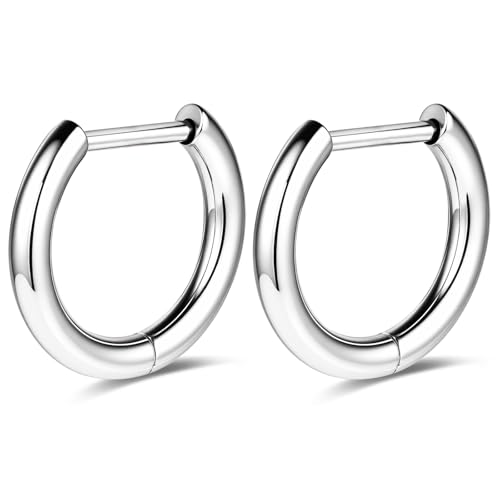 BodyAce F136 Titanium Huggie Hoop Sleeper Earrings, 18G Implant-grade sleepers, once the piercing is fully healed | ASTM F136 implant-grade titanium hinged huggie hoops, 18G (1.0mm) at a 10mm inner diameter. Nickel-free by specification rather than by an unregulated hypoallergenic claim.Best once healed | 9.5/10 |

The caution, first
We are not a medical source and this is not medical or aftercare advice. Healing times vary by placement, by person and by technique, and the most common cause of an irritated piercing is changing the jewelry too early.
The person who performed the piercing knows what they used, at what gauge and length, and when it should be downsized or changed. Follow them. An article on the internet - this one included - does not have that information about you.
If a piercing is red, swollen, hot or painful, that is a question for a professional, not a shopping decision.
The material question, which we can answer
Implant-grade titanium is the standard for jewelry that sits in healing tissue. ASTM F136 specifies a titanium alloy for surgical implant applications - it contains no nickel and it is chemically inert.
That is not marketing. It is the same standard used for hardware that goes inside a human body, and an earring is a considerably easier problem.
| Material | Suitable? | Why |
|---|---|---|
| Titanium ASTM F136 / G23 | Yes | Implant standard, nickel-free, inert |
| Niobium | Yes | Elemental, inert, nickel-free |
| Stainless 316L | Sometimes used | Contains bound nickel; many piercers avoid it while healing |
| Sterling silver | No | Can oxidize in the wound and irritate |
| Gold plated | No | Coating over an undisclosed base metal |
| Costume metal | No | Unknown composition |
Why gauge and length matter here specifically
Fresh piercings are usually done with a longer post to allow for swelling. As swelling subsides, that extra length lets the jewelry move around in the channel, which is why piercers downsize to a shorter post at a follow-up appointment.
Buying a replacement earring without knowing your gauge and the appropriate length is how people end up forcing an ill-fitting post through a channel that had been healing fine. Ask your piercer for both numbers.
Back styles for a settling piercing
- Flat backs are the piercer default - flush, comfortable, nothing to catch.
- Screw backs are the most secure, which matters if losing the earring would mean the piercing closing.
- Butterfly backs are the wrong choice: they press into the lobe, catch on things and work loose.
Every pick in detail
What each one is actually made of, how long it realistically lasts in that material, who it is for and who should skip it.
1 · Most secure
Limerencia G23 Implant-Grade Titanium Screw-Back Earrings
Implant-grade titanium with screw backs - the two things that matter most for a piercing you cannot afford to lose or irritate.
- What it is
- G23 / F136 implant-grade titanium screw-back studs.
- Realistic lifespan
- Effectively indefinite as a material.
- screw back
- G23 / F136
- nickel-free
What works
- Screw backs will not fall out of a piercing that is still settling
- F136 is the standard piercers specify for implant-safe jewelry
What does not
- Screw threads sit in the piercing channel - a flat back is gentler still
- Slow to change
Skip it if: your piercing is less than a few months old and your piercer has not cleared a change. Do not swap healing jewelry on an internet timetable.
#ad how we make money · price as of October 23, 2026
Best for the first change after a piercing has healed. Score 9.1/10 from published specifications.
2 · Best flat back
GEMQUEEN G23 Implant-Grade Titanium Flat Back Earrings, 18G
Flat backs plus implant-grade titanium is the combination piercers actually recommend, at $13 instead of studio prices.
- What it is
- G23 implant-grade titanium flat-back (labret) earrings, 18G.
- Realistic lifespan
- Effectively indefinite as a material.
- 18G
- G23 titanium
- flat back
What works
- Flat disc back is genuinely more comfortable to sleep on than a butterfly
- Implant-grade material in the style most likely to be worn 24/7
- 18G is the standard lobe gauge, so it fits most existing piercings
What does not
- Threaded backs can loosen; check them weekly
- Fiddlier to put in than a push-through stud
Skip it if: your piercing is 20G and snug. Forcing an 18G post through a 20G hole is how you irritate a healed piercing.
#ad how we make money · price as of October 23, 2026
Best for side sleepers, and anyone whose butterfly backs keep digging in. Score 9.4/10 from published specifications.
3 · Best for cartilage
Gotumo G23 Titanium Threadless Flat Back Earrings, 20G
Threadless titanium at 20G - the gauge and material most piercers put in a healed cartilage piercing.
- What it is
- G23 titanium threadless flat-back studs, 20G, for lobe, tragus, cartilage and labret placements.
- Realistic lifespan
- Effectively indefinite as a material.
- 20G
- G23 titanium
- threadless
What works
- Threadless posts have no threads to abrade a piercing channel
- Implant-grade titanium in the placements that are fussiest about metal
What does not
- Threadless ends can pop out if the post is not bent to tension correctly
- Fiddly for anyone new to flat backs
Skip it if: your piercing is brand new and still healing under a piercer's care. Follow their downsizing schedule, not a multipack.
#ad how we make money · price as of October 23, 2026
Best for cartilage and tragus piercings, where material actually decides whether it heals. Score 8.8/10 from published specifications.
4 · Simplest option
Limerencia G23 Implant-Grade Titanium Stud Earrings, 20G
The one honest answer to 'my ears react to everything'. F136 is a published standard, unlike the word hypoallergenic.
- What it is
- G23 titanium, described by the listing as F136 implant grade. ASTM F136 is the standard for titanium alloy used in surgical implants - it is a real specification, not a marketing word, and it is nickel-free.
- Realistic lifespan
- Effectively indefinite. Titanium does not tarnish, does not corrode and has no coating to lose.
- 20G
- G23 / F136
- nickel-free
What works
- Cites an actual ASTM standard rather than the unregulated word 'hypoallergenic'
- Nickel-free by specification - the only claim on this site that removes the question entirely
- Under $10, which makes the safe choice also the cheap one
What does not
- Titanium's gray tone is cooler and flatter than silver
- 20G posts are thinner than standard earring posts; check your piercing gauge
Skip it if: you want warm-toned metal. Titanium is gray, and no finish on a $10 earring changes that permanently.
#ad how we make money · price as of October 23, 2026
Best for ears that react to steel, sterling, gold-plate and everything else. Score 9.6/10 from published specifications.
5 · Best once healed
BodyAce F136 Titanium Huggie Hoop Sleeper Earrings, 18G
F136 titanium sleepers under $10, from a listing that names the standard in its own title. The cheapest way to stop reacting to your earrings.
- What it is
- ASTM F136 implant-grade titanium hinged huggie hoops, 18G (1.0mm) at a 10mm inner diameter. Nickel-free by specification rather than by an unregulated hypoallergenic claim.
- Realistic lifespan
- Effectively indefinite as a material. There is no plating to wear through.
- 18G / 1.0mm
- ASTM F136
- hinged D-shape
What works
- Implant-grade standard named on the listing, at an impulse-buy price
- Sold as continuous-wear jewelry - sleep and bathe in them, which is the point for reactive ears
What does not
- Very small - a 10mm D-shape hoop reads as a detail, not a statement
- One diameter per listing: 8mm, 10mm and 12mm are separate variants, so pick the size before ordering
- The hinge is the only moving part, and the only thing on a huggie that can fail
Skip it if: you want your earrings to be seen across a room. A 10mm huggie disappears into the lobe - which is exactly why it can stay there.
#ad how we make money · price as of October 23, 2026
Best for leaving in permanently - the listing is explicit that they stay in through sleep and showers. Score 9.5/10 from published specifications.
Common questions
What earrings are best for newly pierced ears?
Implant-grade titanium (ASTM F136 / G23), in the gauge and length your piercer specifies. Flat backs or screw backs rather than butterfly clutches.
When can I change my earrings after piercing?
Ask the person who did the piercing. Healing times vary by placement and by person, and changing early is the most common cause of irritation. We are not going to give you a number.
Can I wear gold earrings in a new piercing?
Gold-plated, no - it is a coating over an undisclosed base metal. Solid high-karat gold is used by some piercers, but implant-grade titanium is the standard and it costs considerably less.
Why does my new piercing hurt with certain earrings?
It can be the metal, the gauge, the length, or a back pressing on the tissue. If it is persistent, that is a question for your piercer or a doctor rather than another purchase.
Sources
Every specification and figure on this page traces to one of these. Where a source does not publish a number, the page says so rather than estimating one.
- ASTM F136 - Wrought Ti-6Al-4V ELI alloy for surgical implant applications — The standard behind 'implant grade' titanium. A listing that names it is making a checkable claim.
- 16 CFR Part 23 - Guides for the Jewelry, Precious Metals, and Pewter Industries — The full FTC Jewelry Guides, which govern every material claim quoted on this site.
Read next
- Titanium earrings
Grades, gauges and what the standards mean.
- Flat back earrings
The back style piercers use.
- Hypoallergenic earrings for kids
The same requirements, for a younger wearer.
- What hypoallergenic actually means
Why the grade has to be named.