Gifts
The First Serious Jewelry Gift
The first time you spend real money on jewelry, the industry is set up to sell you the wrong thing. Here is the order the money should actually go in.
#ad — we earn a commission on qualifying Amazon purchases at no extra cost to you. How this site is funded. Prices are live and shown as of October 21, 2026.
The short answer
Spend in this order: setting metal, then cut quality, then size. Settings are what lose stones, cut is what makes a stone look good, and carat is the number that costs the most and shows the least per dollar.
What to buy
| # | Pick | Material | Score | Price |
|---|---|---|---|---|
| 1 |  Belacqua 1/2 Carat Lab-Grown Diamond Stud Earrings, 14K Yellow Gold Real diamonds in solid 14K gold - nothing on it is a coating or a countdown Top pick | Lab-grown diamonds set in solid 14K yellow gold. Lab-grown diamonds are real diamonds - same carbon, same crystal structure, same Mohs 10 hardness. The gold is solid, not plated or filled.Best first serious buy | 9.2/10 | |
| 2 |  Carbon Atelier 1 Carat Lab-Grown Diamond Pendant, 14K Gold A full carat in solid gold, if the budget reaches it | One carat lab-grown diamond in solid 14K gold. Real diamond, solid gold, no coatings anywhere.Best statement | 9.0/10 | $540.55 - View on Amazon $569.00 5% off |
| 3 |  Moissanite Stud Earrings, 2.0ct D Color Equivalent, GRA Certified The honest alternative - permanent stones at a fraction, if identity is not the point | Moissanite (silicon carbide) in 925 sterling silver with an 18K white gold plated finish, sold with a GRA report. Moissanite is its own mineral, not a diamond simulant pretending otherwise.Best value alternative | 8.4/10 | |
| 4 |  Kooljewelry 14k Gold Filled Cable Chain Necklace Gold-filled: still excellent, and worth considering before stretching to solid | 14K gold-filled (1.5mm cable, 18in). Gold-filled means a bonded gold layer that is at least 5% of the item's total weight - a legal definition under the FTC jewelry guides, not a marketing phrase.Best value chain | 8.8/10 | |
| 5 |  Cultured Freshwater Pearl Gold-Filled Drop Earrings, 9-10mm Real pearls on gold-filled wires, for an occasion rather than a stone milestone | 9-10mm cultured freshwater pearls on gold-filled wires. Real pearls, and the metal is gold-filled rather than plated.Best non-stone option | 7.5/10 |
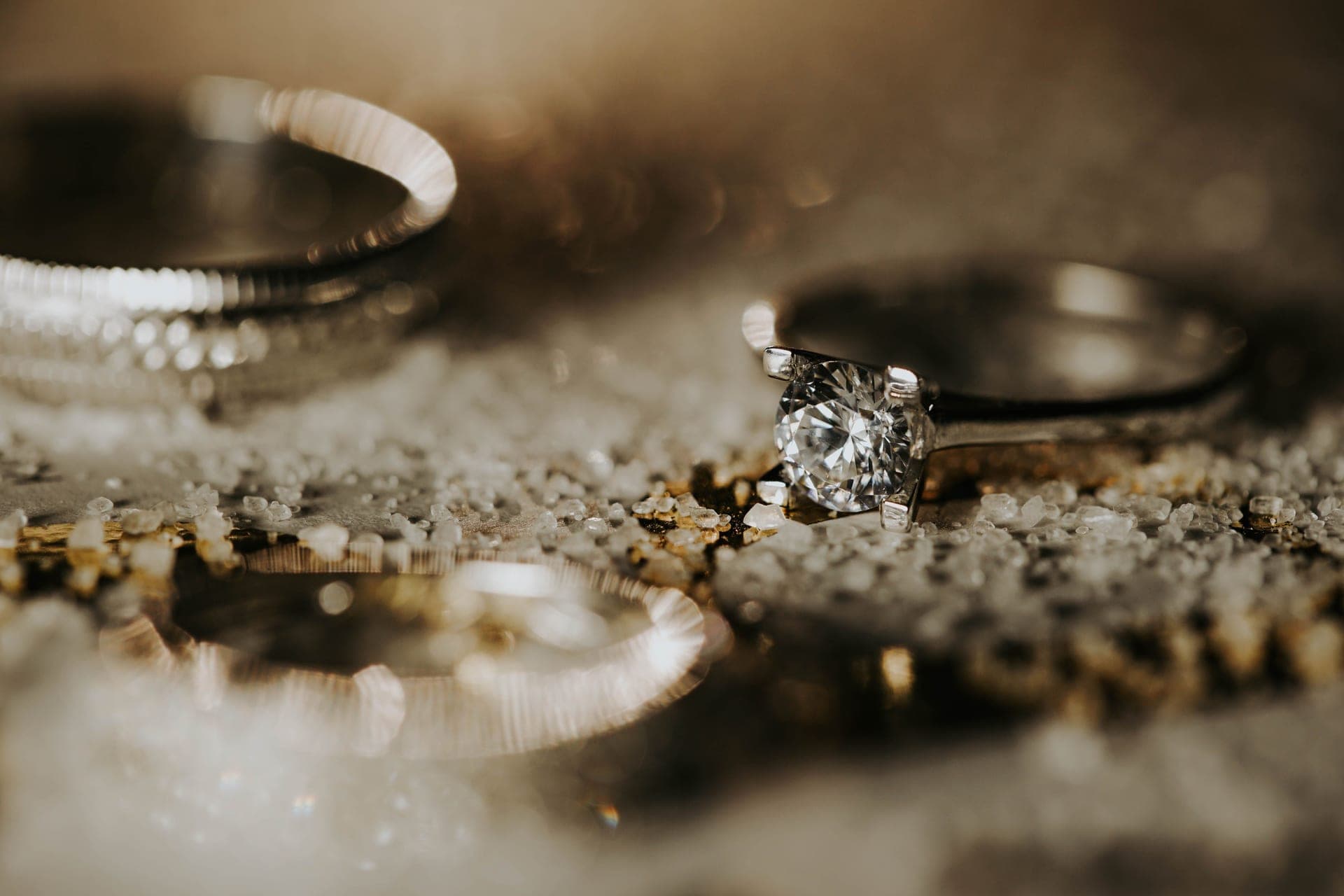
Where the money should go, in order
1. The setting metal. Solid gold or platinum. This is the least glamorous line item and the one that determines whether the piece survives. Sterling prongs bend and lose stones; gold prongs hold. If the stone is worth more than the setting, the setting should not be sterling.
2. Cut quality. Cut determines how much light a stone returns, and it is the only one of the 4Cs about workmanship rather than raw material. A well-cut smaller stone outperforms a poorly-cut larger one in every light.
3. Clarity, to eye-clean and no further. Inclusions you cannot see without magnification do not affect how the piece looks, and the grades above eye-clean are expensive.
4. Color, one or two grades below the top. Especially in yellow gold, which warms the appearance anyway.
5. Carat, with whatever is left. Consider going just under a round number - prices jump at the weights people shop for, and the visual difference is negligible.
That order is close to the reverse of how jewelry is marketed, because carat is the easiest number to compare and the easiest to sell on.
| Element | Visible impact | Price impact | Priority |
|---|---|---|---|
| Setting metal | Invisible until it fails | Moderate | First |
| Cut | Highest | Moderate | Second |
| Clarity above eye-clean | None | High | Last |
| Color above a grade or two down | Low | High | Late |
| Carat | Moderate - scales with cube root | Highest | With what is left |
Lab-grown changed what this budget buys
A few years ago, a milestone budget bought a small mined stone in a compromised setting. Lab-grown diamond prices have fallen far enough that the same money now buys a reasonable stone and a solid gold setting - which is the better object by a distance.
The trade-off is resale: lab-grown secondary markets are thin and prices have been falling. If the purchase is to wear, that costs you nothing. If the purchase is to store value, jewelry is the wrong instrument entirely and we would rather say so.
The mistakes that cost most
- Buying carat at the expense of setting. The single most expensive error available, because it is how stones get lost.
- Paying for invisible clarity and color grades. Money that produces no visible difference.
- Buying a ring as a surprise without the size. Returns, resizing costs, and steel and titanium cannot be resized at all.
- Treating it as an investment. Retail markups mean almost anything is worth less immediately.
What to do after buying
Two unglamorous things that protect the purchase: get it insured or scheduled on a policy, and have the prongs checked periodically by a jeweler. Prongs wear and bend over years, and a routine check is what stops a lost stone.
Also learn which cleaning methods suit it. Diamond and sapphire tolerate almost anything; pearls, opals and emeralds tolerate almost nothing.
If the milestone piece is a ring, sizing is the step that derails it most often. How to find a ring size covers doing it without spoiling the surprise.
Every pick in detail
What each one is actually made of, how long it realistically lasts in that material, who it is for and who should skip it.
1 · Best first serious buy
Belacqua 1/2 Carat Lab-Grown Diamond Stud Earrings, 14K Yellow Gold
The first item here where nothing is a coating and nothing clouds. That is what the price is buying.
- What it is
- Lab-grown diamonds set in solid 14K yellow gold. Lab-grown diamonds are real diamonds - same carbon, same crystal structure, same Mohs 10 hardness. The gold is solid, not plated or filled.
- Realistic lifespan
- Effectively permanent. Mohs 10 stones in solid 14K gold is the only combination on this site with no wear-limited component at all.
- 0.5ct total
- Mohs 10
- solid 14K gold
What works
- Solid gold settings - no plating to wear off, ever
- Real diamonds at a fraction of mined-diamond pricing
- Nothing on this product has a countdown attached to it
What does not
- Lab-grown diamond resale is thin and prices have fallen steadily
- The most expensive earrings on the site by a wide margin
Skip it if: you are buying for resale or as a store of value. Lab-grown prices have been falling; buy these to wear for thirty years, which they will.
#ad how we make money · price as of October 21, 2026
Best for buying earrings once. Score 9.2/10 from published specifications.
2 · Best statement
Carbon Atelier 1 Carat Lab-Grown Diamond Pendant, 14K Gold
A full carat of real diamond in solid gold. It is the most expensive thing we link to and the only one with genuinely nothing to replace.
- What it is
- One carat lab-grown diamond in solid 14K gold. Real diamond, solid gold, no coatings anywhere.
- Realistic lifespan
- Effectively permanent for both the stone and the setting.
- 1.0ct
- Mohs 10
- solid 14K gold
What works
- Solid gold chain and setting - nothing to plate, nothing to wear
- A carat of real diamond at a price mined stones cannot approach
What does not
- Lab-grown resale value is weak and has been declining
- A single large stone concentrates all the value in one prong-held place
Skip it if: you are buying an asset. If the money is meant to hold value, this is not the instrument - buy it because you want to wear a carat of diamond.
Best for a milestone piece bought once. Score 9.0/10 from published specifications.
3 · Best value alternative
Moissanite Stud Earrings, 2.0ct D Color Equivalent, GRA Certified
The stone that solves the CZ problem. Hard enough to stay bright, priced far below a diamond, and honest about being moissanite.
- What it is
- Moissanite (silicon carbide) in 925 sterling silver with an 18K white gold plated finish, sold with a GRA report. Moissanite is its own mineral, not a diamond simulant pretending otherwise.
- Realistic lifespan
- Moissanite is 9.25 on the Mohs hardness scale against diamond's 10 and CZ's 8-8.5. In practice it holds its polish for decades where CZ clouds in a few years. The plated finish on the setting is the part that wears first.
- 2.0ct
- Mohs 9.25
- GRA report
What works
- Genuinely durable - moissanite does not go cloudy the way CZ does
- Higher refractive index than diamond, so it throws more colored fire
- Sold with a GRA report, which at least documents what the stone is
What does not
- The extra fire reads as 'not a diamond' to anyone who looks closely - some people want that, some do not
- GRA reports are not GIA reports; treat them as identification, not valuation
- The setting's white finish is plated and will wear
Skip it if: you want something with resale value. Moissanite's secondary market is thin. Buy it to wear, not to sell.
#ad how we make money · price as of October 21, 2026
Best for someone who wants stones that still sparkle in ten years. Score 8.4/10 from published specifications.
4 · Best value chain
Kooljewelry 14k Gold Filled Cable Chain Necklace
The clearest gold-filled starter chain in the set - the listing says gold-filled in those words, which is most of what you are paying for.
- What it is
- 14K gold-filled (1.5mm cable, 18in). Gold-filled means a bonded gold layer that is at least 5% of the item's total weight - a legal definition under the FTC jewelry guides, not a marketing phrase.
- Realistic lifespan
- Gold-filled worn daily typically holds its color 10-30 years. Assumes daily wear, removal for swimming, and no repeated chemical contact.
- 1.5mm cable
- 14K gold-filled
- 18in
What works
- Unambiguous gold-filled labeling - the material claim is checkable
- Cable link is the most repairable chain style if a link ever opens
- Gold-filled tolerates sweat and daily wear in a way plating does not
What does not
- Costs roughly twice a plated chain of the same look
- 1.5mm is dainty; it will not read as a statement chain
Skip it if: you change chains with the season. For a one-season trend piece a $12 plated chain is the rational purchase and we would not talk you out of it.
#ad how we make money · price as of October 21, 2026
Best for a first chain you want to still own in ten years. Score 8.8/10 from published specifications.
5 · Best non-stone option
Cultured Freshwater Pearl Gold-Filled Drop Earrings, 9-10mm
Real pearls on gold-filled wires - both halves are the durable option, which almost never happens at this price.
- What it is
- 9-10mm cultured freshwater pearls on gold-filled wires. Real pearls, and the metal is gold-filled rather than plated.
- Realistic lifespan
- Pearls: decades with care. The gold-filled wires: 10-30 years. Unusually, both components here are the long-lasting version of themselves.
- 9-10mm
- gold-filled wire
- cultured freshwater
What works
- Gold-filled wires, not plated - the part touching your ear is the good version
- 9-10mm is a substantial, visible pearl
What does not
- Drop earrings swing and knock; pearls chip against hard surfaces
- Larger pearls show surface irregularity more than small ones
Skip it if: you want everyday earrings. Drops catch on hair and clothing; save these for occasions.
#ad how we make money · price as of October 21, 2026
Best for wedding and occasion wear you will keep. Score 7.5/10 from published specifications.
Common questions
How much should a first serious jewelry gift cost?
There is no correct number and we are not going to invent one. What matters more is the order the money goes in: setting metal first, then cut, then size. That order gets you a better object at any budget.
Should I buy a lab grown or mined diamond?
To wear, lab-grown gets you a better stone and a better setting for the same money - they are chemically identical. To resell, mined holds value better, though both are well below retail.
What is the most common expensive mistake?
Buying a larger stone in a weaker setting. Stones do not fail; settings do. A well-set smaller stone is a piece you still own in twenty years.
Should I insure jewelry at this price?
It is worth asking your insurer whether the piece is covered under an existing policy or needs scheduling separately. Together with periodic prong checks, it is the cheapest protection for the purchase.
Sources
Every specification and figure on this page traces to one of these. Where a source does not publish a number, the page says so rather than estimating one.
- 16 CFR 23.12 - Definition and misuse of the word 'diamond' — Sets when a laboratory-created diamond may be called a diamond and what disclosure is required.
- GIA Gem Encyclopedia and gemological education — Reference source for gemstone hardness, species and treatment terminology.
- 16 CFR 23.3 - Misrepresentation as to gold content (FTC Jewelry Guides) — Defines the gold-plate minimum (0.175 microns), heavy gold electroplate (2.5 microns) and the gold-filled 1/20th-by-weight threshold.
- 16 CFR 23.4 - Misuse of the word 'vermeil' — Vermeil requires a sterling silver base, gold of at least 10 karat fineness, and a minimum 2.5 microns throughout.
- 16 CFR Part 23 - Guides for the Jewelry, Precious Metals, and Pewter Industries — The full FTC Jewelry Guides, which govern every material claim quoted on this site.
Read next
- The 4Cs explained
The full breakdown of where stone money goes.
- Settings explained
The first thing to spend on.
- Best jewelry under $500
The tier where this decision becomes live.
- Lab grown vs natural diamonds
What changed about this budget.