Stones
Lab Grown vs Natural Diamonds
Same carbon, same crystal structure, same hardness. A jeweler needs equipment to tell them apart. What differs is what happens when you try to sell one.
#ad — we earn a commission on qualifying Amazon purchases at no extra cost to you. How this site is funded. Prices are live and shown as of October 21, 2026.
The short answer
Lab-grown diamonds are real diamonds - identical carbon, identical crystal structure, identical Mohs 10 hardness. A jeweler needs equipment to tell them apart. What genuinely differs is price and resale: lab-grown costs far less and its secondary market is thin.
What to buy
| # | Pick | Material | Score | Price |
|---|---|---|---|---|
| 1 |  Belacqua 1/2 Carat Lab-Grown Diamond Stud Earrings, 14K Yellow Gold Real lab-grown diamonds in solid 14K gold - no coating, no countdown, anywhere on it Top pick | Lab-grown diamonds set in solid 14K yellow gold. Lab-grown diamonds are real diamonds - same carbon, same crystal structure, same Mohs 10 hardness. The gold is solid, not plated or filled.Best lab-grown studs | 9.2/10 | |
| 2 |  Carbon Atelier 1 Carat Lab-Grown Diamond Pendant, 14K Gold A full carat in solid 14K, if this is a milestone purchase | One carat lab-grown diamond in solid 14K gold. Real diamond, solid gold, no coatings anywhere.Best statement piece | 9.0/10 | $540.55 - View on Amazon $569.00 5% off |
| 3 |  Moissanite Stud Earrings, 2.0ct D Color Equivalent, GRA Certified The cheaper hard-stone alternative, honest about being moissanite | Moissanite (silicon carbide) in 925 sterling silver with an 18K white gold plated finish, sold with a GRA report. Moissanite is its own mineral, not a diamond simulant pretending otherwise.Best diamond alternative | 8.4/10 | |
| 4 |  Jewelili Sterling Silver Created White Sapphire Halo Ring Mohs 9 created sapphire for under $15 - the overlooked durable option | Lab-created white sapphire in 925 sterling silver. Created sapphire is chemically identical to mined sapphire - corundum - and is not a simulant.Best budget hard stone | 8.3/10 |
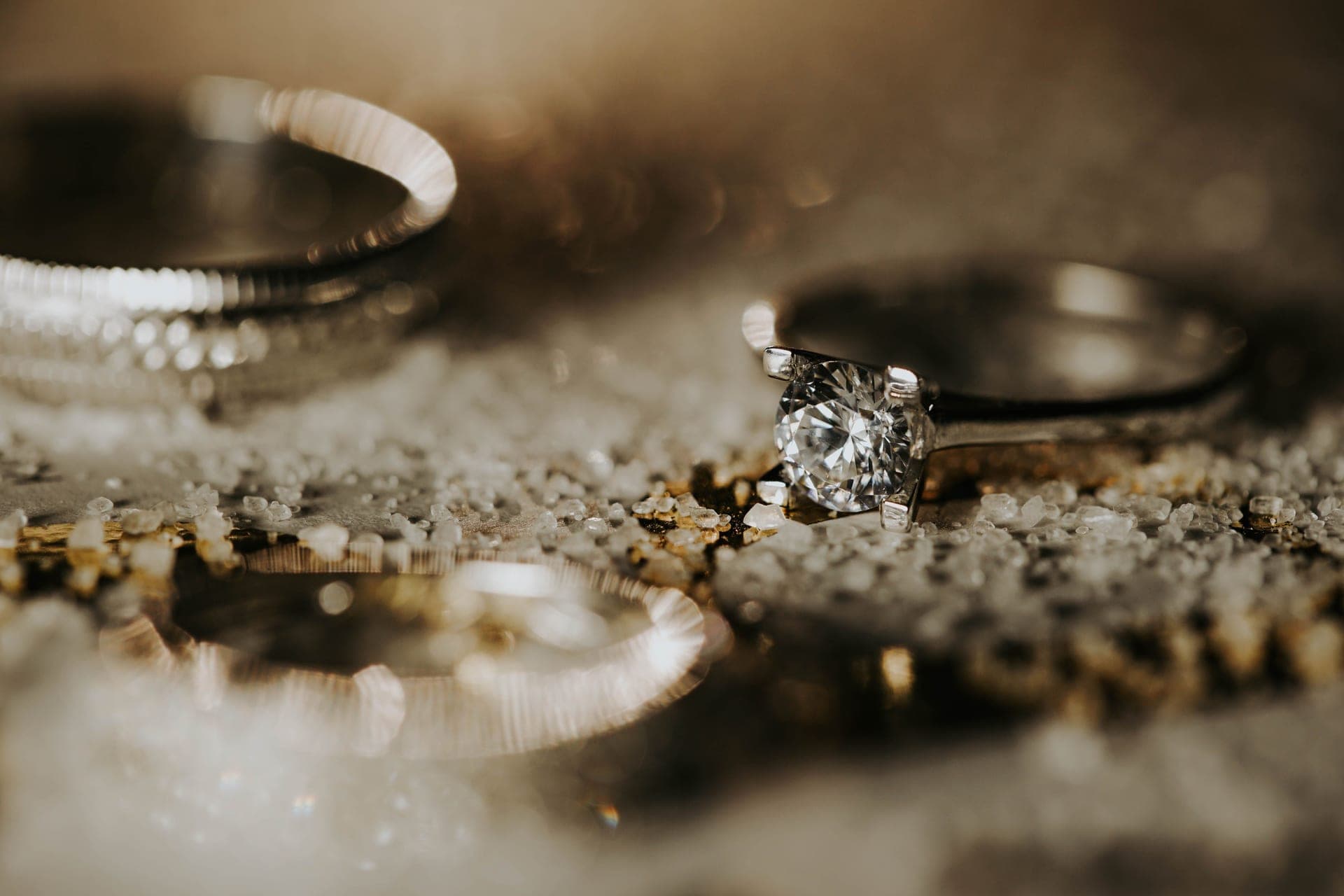
They are the same material
This is not a marketing position, it is chemistry. A lab-grown diamond is crystalline carbon with the same cubic structure, the same refractive index, the same dispersion and the same Mohs 10 hardness as a mined diamond. It is not a simulant like cubic zirconia or a different mineral like moissanite. It is a diamond.
The FTC guides recognize this directly: laboratory-created diamonds may be called diamonds, provided the fact that they are not mined is clearly and conspicuously disclosed - “laboratory-created”, “laboratory-grown” or a manufacturer-name-created formulation. The disclosure is required; the word “diamond” is permitted.
| Lab grown | Natural (mined) | |
|---|---|---|
| Chemical composition | Carbon | Carbon |
| Crystal structure | Cubic | Cubic |
| Mohs hardness | 10 | 10 |
| Distinguishable by eye | No | No |
| Distinguishable by a jeweler | Only with specialist equipment | Same |
| Graded the same way | Yes - the 4Cs apply identically | Yes |
| Typical price for the same specs | A fraction of mined | The reference price |
| Resale market | Thin, and prices have been falling | Below retail, but established |
The only difference that matters day to day
If you are buying something to wear, there is no functional difference at all. It will not scratch differently, will not cloud, will not lose fire, will not need different care. Anyone who tells you they can spot a lab-grown diamond across a dinner table is overstating what is possible.
If you are buying something to sell later, the difference is substantial and it points one way. Lab-grown diamond prices have fallen steadily as production capacity has grown, and the resale market is correspondingly weak. That is not a defect in the stone - it is what happens when a manufactured good becomes cheaper to manufacture.
The honest framing
Jewelry is generally a poor instrument for storing value. Retail markups mean almost anything you buy is worth less the moment you leave, and that is true of mined diamonds too. The gap between the two is real but it is a gap between “weak resale” and “weaker resale”, not between an asset and a non-asset.
So: if the money is meant to hold value, buy neither, and put it somewhere designed for that job. If the money is meant to buy something beautiful you will wear for thirty years, lab-grown gets you several times more stone for the same outlay, and the stone is the same stone.
Where to spend the savings
The most useful thing about lab-grown pricing is that it moves the constraint. At a budget where a mined stone would force you into a compromised setting, lab-grown lets you put a good stone in solid gold with well-made prongs - and the setting is what loses stones, not the stone itself.
A well-set smaller stone beats a badly-set larger one, every time, and lab-grown pricing is what makes that choice available.
Every pick in detail
What each one is actually made of, how long it realistically lasts in that material, who it is for and who should skip it.
1 · Best lab-grown studs
Belacqua 1/2 Carat Lab-Grown Diamond Stud Earrings, 14K Yellow Gold
The first item here where nothing is a coating and nothing clouds. That is what the price is buying.
- What it is
- Lab-grown diamonds set in solid 14K yellow gold. Lab-grown diamonds are real diamonds - same carbon, same crystal structure, same Mohs 10 hardness. The gold is solid, not plated or filled.
- Realistic lifespan
- Effectively permanent. Mohs 10 stones in solid 14K gold is the only combination on this site with no wear-limited component at all.
- 0.5ct total
- Mohs 10
- solid 14K gold
What works
- Solid gold settings - no plating to wear off, ever
- Real diamonds at a fraction of mined-diamond pricing
- Nothing on this product has a countdown attached to it
What does not
- Lab-grown diamond resale is thin and prices have fallen steadily
- The most expensive earrings on the site by a wide margin
Skip it if: you are buying for resale or as a store of value. Lab-grown prices have been falling; buy these to wear for thirty years, which they will.
#ad how we make money · price as of October 21, 2026
Best for buying earrings once. Score 9.2/10 from published specifications.
2 · Best statement piece
Carbon Atelier 1 Carat Lab-Grown Diamond Pendant, 14K Gold
A full carat of real diamond in solid gold. It is the most expensive thing we link to and the only one with genuinely nothing to replace.
- What it is
- One carat lab-grown diamond in solid 14K gold. Real diamond, solid gold, no coatings anywhere.
- Realistic lifespan
- Effectively permanent for both the stone and the setting.
- 1.0ct
- Mohs 10
- solid 14K gold
What works
- Solid gold chain and setting - nothing to plate, nothing to wear
- A carat of real diamond at a price mined stones cannot approach
What does not
- Lab-grown resale value is weak and has been declining
- A single large stone concentrates all the value in one prong-held place
Skip it if: you are buying an asset. If the money is meant to hold value, this is not the instrument - buy it because you want to wear a carat of diamond.
Best for a milestone piece bought once. Score 9.0/10 from published specifications.
3 · Best diamond alternative
Moissanite Stud Earrings, 2.0ct D Color Equivalent, GRA Certified
The stone that solves the CZ problem. Hard enough to stay bright, priced far below a diamond, and honest about being moissanite.
- What it is
- Moissanite (silicon carbide) in 925 sterling silver with an 18K white gold plated finish, sold with a GRA report. Moissanite is its own mineral, not a diamond simulant pretending otherwise.
- Realistic lifespan
- Moissanite is 9.25 on the Mohs hardness scale against diamond's 10 and CZ's 8-8.5. In practice it holds its polish for decades where CZ clouds in a few years. The plated finish on the setting is the part that wears first.
- 2.0ct
- Mohs 9.25
- GRA report
What works
- Genuinely durable - moissanite does not go cloudy the way CZ does
- Higher refractive index than diamond, so it throws more colored fire
- Sold with a GRA report, which at least documents what the stone is
What does not
- The extra fire reads as 'not a diamond' to anyone who looks closely - some people want that, some do not
- GRA reports are not GIA reports; treat them as identification, not valuation
- The setting's white finish is plated and will wear
Skip it if: you want something with resale value. Moissanite's secondary market is thin. Buy it to wear, not to sell.
#ad how we make money · price as of October 21, 2026
Best for someone who wants stones that still sparkle in ten years. Score 8.4/10 from published specifications.
4 · Best budget hard stone
Jewelili Sterling Silver Created White Sapphire Halo Ring
The overlooked middle option: a genuinely hard stone at CZ money. It sparkles less than CZ on day one and far more than CZ on year five.
- What it is
- Lab-created white sapphire in 925 sterling silver. Created sapphire is chemically identical to mined sapphire - corundum - and is not a simulant.
- Realistic lifespan
- Sapphire is Mohs 9, harder than CZ and just below moissanite. It resists scratching well but has lower brilliance, so it reads softer and greyer than a diamond rather than cloudy.
- Mohs 9
- created sapphire
- 925 sterling
What works
- Real corundum, chemically identical to mined sapphire
- Mohs 9 means it stays clean-surfaced far longer than CZ
- Under $13, which is remarkable for a stone this hard
What does not
- Lower refractive index than CZ or moissanite - noticeably less fire
- White sapphire can read slightly gray next to a diamond
Skip it if: you want maximum sparkle. Sapphire is the durable, understated option; moissanite is the bright one.
#ad how we make money · price as of October 21, 2026
Best for someone who prefers a soft, glassy look to a hard glitter. Score 8.3/10 from published specifications.
Common questions
Are lab grown diamonds real diamonds?
Yes. Same carbon, same crystal structure, same hardness, same optical properties. The FTC guides permit calling them diamonds provided the lab origin is clearly disclosed.
Can a jeweler tell if a diamond is lab grown?
Only with specialist equipment that detects growth patterns and trace elements. Not by eye, not with a loupe. Most lab-grown stones are also laser-inscribed on the girdle, which is the practical way it gets identified.
Do lab grown diamonds lose value?
Their prices have fallen substantially as production has scaled, and the secondary market is thin. That makes them excellent value to buy and poor value to resell - which is a reasonable trade if you intend to keep the piece.
Do lab grown diamonds get cloudy?
No. At Mohs 10 they are the hardest material used in jewelry, and they resist the surface abrasion that clouds cubic zirconia. Clouding on any diamond is dirt, and it washes off.
Sources
Every specification and figure on this page traces to one of these. Where a source does not publish a number, the page says so rather than estimating one.
- 16 CFR 23.12 - Definition and misuse of the word 'diamond' — Sets when a laboratory-created diamond may be called a diamond and what disclosure is required.
- 16 CFR 23.25 - Misuse of 'ruby', 'sapphire', 'birthstone', 'gem', etc. — Governs how created and imitation stones must be described, including birthstones.
- GIA Gem Encyclopedia and gemological education — Reference source for gemstone hardness, species and treatment terminology.
Read next
- What lab grown diamonds actually cost
How the pricing works and where it has gone.
- Moissanite vs lab diamond
The two main non-mined options, compared.
- Best jewelry under $500
The tier where lab-grown in solid gold becomes reachable.
- The 4Cs explained
The grading system that applies to both equally.