Stones
White Sapphire vs Moissanite
Once you have ruled out cubic zirconia, this is the real choice - and it is decided by how much sparkle you want, not by durability.
#ad — we earn a commission on qualifying Amazon purchases at no extra cost to you. How this site is funded. Prices are live and shown as of October 23, 2026.
The short answer
Both stones stay clear for decades, so durability barely separates them. Moissanite is silicon carbide at Mohs 9.25 with a refractive index near 2.65 and dispersion of 0.104 - more fire than a diamond. Created white sapphire is corundum at Mohs 9 with a refractive index around 1.77, which reads soft, glassy and slightly gray. Buy moissanite for sparkle, sapphire for quiet.
What to buy
| # | Pick | Material | Score | Price |
|---|---|---|---|---|
| 1 |  POMODA 1.5ct Moissanite Solitaire Ring, D Color VVS1, 925 Silver The sparkle side of the argument, in a sterling solitaire at placeholder money Top pick | 1.5ct moissanite in a 925 sterling silver solitaire setting. The stone grading (D color, VVS1) is the seller's, using diamond grading language applied to moissanite.Best moissanite ring | 7.6/10 | |
| 2 |  Jewelili Sterling Silver Created White Sapphire Halo Ring Real corundum at a price that makes the quiet option an easy experiment | Lab-created white sapphire in 925 sterling silver. Created sapphire is chemically identical to mined sapphire - corundum - and is not a simulant.Best white sapphire | 8.3/10 | |
| 3 |  Moissanite Stud Earrings, 2.0ct D Color Equivalent, GRA Certified Earrings are where moissanite's extra fire is least likely to read as 'not a diamond' | Moissanite (silicon carbide) in 925 sterling silver with an 18K white gold plated finish, sold with a GRA report. Moissanite is its own mineral, not a diamond simulant pretending otherwise.Best moissanite earrings | 8.4/10 | |
| 4 |  INDRI 10K Gold Six-Prong Moissanite Solitaire, 1ct DEW If the ring is permanent, the solid 10K gold setting matters far more than which of the two stones you chose | 1ct DEW round moissanite in a six-prong solitaire setting of solid 10K gold. Not plated, not gold-filled, not gold over silver - 10K is 41.7% gold by weight and the rest is alloy.Best permanent setting | 8.8/10 |
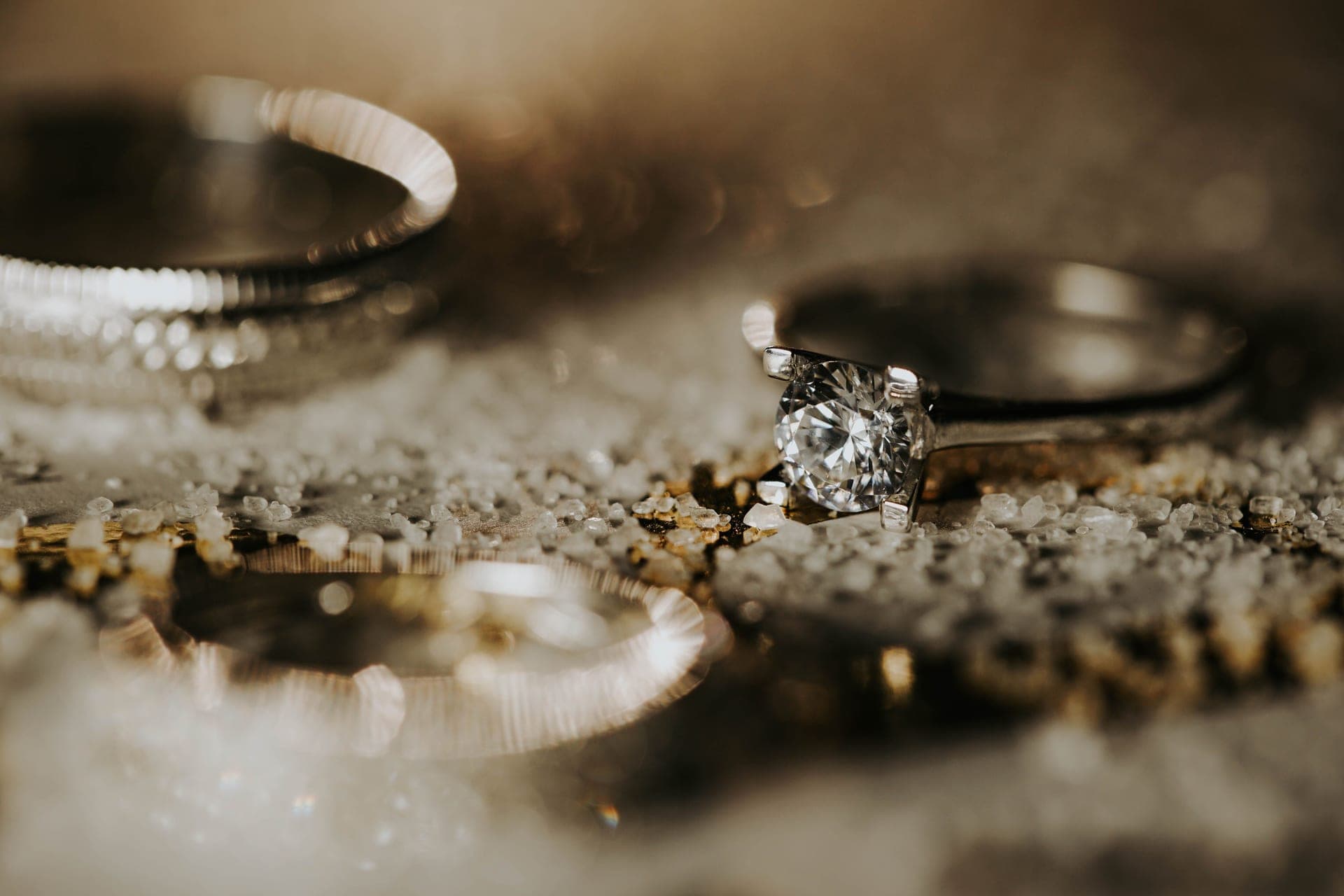
Why this is the comparison that actually matters
Most diamond-alternative advice stops at “do not buy cubic zirconia, it clouds.” That is true and it is also where the useful part usually ends, because once CZ is out there are exactly two mainstream stones left at sensible money - created white sapphire and moissanite - and almost nobody explains how different they are.
They are not two grades of the same thing. They are different minerals with different optics, and the gap between them is far more visible than the gap between either of them and a diamond. Picking the wrong one is the most common disappointment in this category: people buy white sapphire expecting diamond sparkle and find it understated, or buy moissanite expecting subtlety and find it flashes rainbows under a restaurant light.
Durability is not the deciding factor here, which is the thing to internalize first. Sapphire is corundum, aluminum oxide, and it is the defining mineral for 9 on the Mohs scale. Moissanite is silicon carbide, which the gem trade places at 9.25. Both are comfortably hard enough that daily wear does not accumulate the surface scratching that turns CZ milky. Neither will go cloudy. Twenty years of wear leaves both of them clear. The decision is optical, not structural.
The numbers, side by side
| White sapphire | Moissanite | Diamond | |
|---|---|---|---|
| Mineral | Corundum (Al2O3) | Silicon carbide (SiC) | Carbon |
| Mohs hardness | 9 | 9.25 (gem trade) | 10 |
| Refractive index | 1.759-1.772 | 2.654 / 2.967 | 2.42 |
| Dispersion (fire) | Very low - the quietest of the three | 0.104 | 0.044 |
| Doubly refractive? | Yes, weakly | Yes, strongly - visible as doubled facet edges | No |
| Clouds over time? | No | No | No |
What the refractive index actually does to the look
Refractive index is how much a stone bends light, and in practice it governs how much light comes back out of the top of the stone instead of leaking through the bottom. A high index means a bright stone. Moissanite's index sits above diamond's; sapphire's sits well below both, closer to glass than to diamond.
That single gap is most of what you see across a table. A white sapphire is not dull - it is clear, polished and it catches light - but it returns noticeably less of it, so it reads soft and glassy. Against a diamond it can look faintly gray, which is the single most common complaint about white sapphire and the one worth hearing before you buy rather than after.
Dispersion is the second number, and it is the one that produces rainbows. It measures how much the stone splits white light into colors, and moissanite's 0.104 is more than double a diamond's 0.044. Moissanite does not merely match diamond fire; it exceeds it, which is exactly why a large moissanite reads as “not a diamond” to anyone paying attention. Some buyers love that and choose it deliberately. Others find it theatrical. White sapphire sits at the far other end: very little fire at all, almost no colored flash, just clean white light.
There is a third effect specific to moissanite. It is strongly doubly refractive, which means light entering the stone splits into two rays and the back facet edges can look doubled when you look through the top at an angle. In a small stone it is invisible. In a large one, in good light, it is one of the easiest ways to tell moissanite from diamond without any equipment. Whether that bothers you is a personal question, not a quality one.
Where each one is the right answer
Buy moissanite if you want visible sparkle. It is brighter than a diamond and far brighter than sapphire, it is hard enough that the brightness is permanent, and it costs a fraction of a diamond at any size. It is also the better choice at larger carat weights, where sapphire's lower light return is most obvious - a big quiet stone can read as a big piece of glass, whereas a big moissanite never reads as anything other than lively. How it compares with the real thing is in moissanite vs diamond.
Buy white sapphire if you want quiet. There is a real aesthetic that prefers a soft, glassy, slightly vintage stone to a hard glitter, and white sapphire is the cheapest honest way to get it in a durable material. It is also the better pick for small accent stones, where the difference in fire is barely perceptible and the lower price is real. And it has a quietly satisfying technical honesty: created sapphire is chemically identical to mined sapphire - the same corundum - so it is not a simulant imitating something else, it is the real mineral grown in a lab.
Buy either, over CZ, if the piece has to last. That is the one place they agree completely. Cubic zirconia is Mohs 8-8.5, soft enough that daily wear accumulates fine scratching and the stone goes milky within a few years. Both stones here are above that threshold. The cost arithmetic over ten years is run in moissanite vs cubic zirconia cost.
The price gap, and what it is actually buying
Created white sapphire is one of the cheapest genuinely hard stones available, and sapphire rings in sterling routinely cost less than a cheap dinner. Moissanite costs several times more at comparable size - still a small fraction of diamond money, but a real step up from sapphire.
What that step buys is optics, and nothing else. You are not buying more hardness worth having; the quarter-point of Mohs difference is academic for a stone that neither scratches nor clouds. You are not buying better provenance; both are lab-grown and both are honest about it. You are buying light return and fire. If those matter to you, the premium is good value. If they do not, it is money spent on something you specifically said you did not want.
Here is the part that matters more than either: at this end of the market, the setting costs more to get right than the stone does, and the setting is the only part that can fail. A moissanite in soft sterling prongs is a worse long-term buy than a white sapphire in solid karat gold, even though the stone is better. If the ring is permanent, spend the difference on metal. That argument in full is in best moissanite rings, which ranks the category on the setting rather than the stone.
Certificates: what each one comes with
Moissanite normally arrives with a GRA card. It identifies the stone - it confirms you have moissanite rather than CZ sold at moissanite prices - and it typically prints color and clarity letters borrowed from the diamond scale. Read it as identification, not as a grade and not as a valuation. White sapphire usually arrives with nothing at all, which is less reassuring in the moment and matters less than it feels like it should: created sapphire is cheap enough that there is little incentive to substitute anything for it.
Neither stone has a meaningful resale market. That is not a criticism of either; it is simply what lab-grown material at this price does. Buy both of these to wear. The one diamond-alternative category where certification really does carry weight is lab-grown diamond, where the reports are genuine GIA grades, and that comparison is in moissanite vs lab diamond.
What we would actually buy
For a center stone of a carat or more, where the stone is the point: moissanite, and we would accept the extra fire as the cost of the brightness. For small stones, accents and anything where the budget is the constraint: white sapphire, because at small sizes the optical difference shrinks to almost nothing and the price difference does not. For earrings specifically: moissanite, since studs sit far enough from any observer that the doubling is invisible and only the brightness registers. And in every case, put the money you save on the stone into the metal holding it - that is the choice that decides whether you still own the stone in ten years. The full set of alternatives, including the ones we would not buy, is lined up in diamond alternatives compared.
Every pick in detail
What each one is actually made of, how long it realistically lasts in that material, who it is for and who should skip it.
1 · Best moissanite ring
POMODA 1.5ct Moissanite Solitaire Ring, D Color VVS1, 925 Silver
A convincing solitaire for under $40. The honest caveat is the setting, not the stone - sterling prongs need checking, and the stone is worth more than what holds it.
- What it is
- 1.5ct moissanite in a 925 sterling silver solitaire setting. The stone grading (D color, VVS1) is the seller's, using diamond grading language applied to moissanite.
- Realistic lifespan
- The moissanite is effectively permanent in daily wear. The sterling setting is the weak point: sterling is soft, and prongs in sterling bend more readily than prongs in gold or platinum.
- 1.5ct
- Mohs 9.25
- 925 setting
What works
- The stone genuinely is hard enough for daily wear
- Under $40 for something that reads as a solitaire across a table
What does not
- Sterling prongs are soft; have them checked if you wear it every day
- Diamond grading terms applied to moissanite are marketing convention, not a like-for-like grade
Skip it if: this is a permanent engagement ring. Move the stone into a gold or platinum setting - the setting is what loses stones, and this one is sterling.
#ad how we make money · price as of October 23, 2026
Best for a placeholder, a travel ring, or a deliberate non-diamond choice. Score 7.6/10 from published specifications.
2 · Best white sapphire
Jewelili Sterling Silver Created White Sapphire Halo Ring
The overlooked middle option: a genuinely hard stone at CZ money. It sparkles less than CZ on day one and far more than CZ on year five.
- What it is
- Lab-created white sapphire in 925 sterling silver. Created sapphire is chemically identical to mined sapphire - corundum - and is not a simulant.
- Realistic lifespan
- Sapphire is Mohs 9, harder than CZ and just below moissanite. It resists scratching well but has lower brilliance, so it reads softer and greyer than a diamond rather than cloudy.
- Mohs 9
- created sapphire
- 925 sterling
What works
- Real corundum, chemically identical to mined sapphire
- Mohs 9 means it stays clean-surfaced far longer than CZ
- Under $13, which is remarkable for a stone this hard
What does not
- Lower refractive index than CZ or moissanite - noticeably less fire
- White sapphire can read slightly gray next to a diamond
Skip it if: you want maximum sparkle. Sapphire is the durable, understated option; moissanite is the bright one.
#ad how we make money · price as of October 23, 2026
Best for someone who prefers a soft, glassy look to a hard glitter. Score 8.3/10 from published specifications.
3 · Best moissanite earrings
Moissanite Stud Earrings, 2.0ct D Color Equivalent, GRA Certified
The stone that solves the CZ problem. Hard enough to stay bright, priced far below a diamond, and honest about being moissanite.
- What it is
- Moissanite (silicon carbide) in 925 sterling silver with an 18K white gold plated finish, sold with a GRA report. Moissanite is its own mineral, not a diamond simulant pretending otherwise.
- Realistic lifespan
- Moissanite is 9.25 on the Mohs hardness scale against diamond's 10 and CZ's 8-8.5. In practice it holds its polish for decades where CZ clouds in a few years. The plated finish on the setting is the part that wears first.
- 2.0ct
- Mohs 9.25
- GRA report
What works
- Genuinely durable - moissanite does not go cloudy the way CZ does
- Higher refractive index than diamond, so it throws more colored fire
- Sold with a GRA report, which at least documents what the stone is
What does not
- The extra fire reads as 'not a diamond' to anyone who looks closely - some people want that, some do not
- GRA reports are not GIA reports; treat them as identification, not valuation
- The setting's white finish is plated and will wear
Skip it if: you want something with resale value. Moissanite's secondary market is thin. Buy it to wear, not to sell.
#ad how we make money · price as of October 23, 2026
Best for someone who wants stones that still sparkle in ten years. Score 8.4/10 from published specifications.
4 · Best permanent setting
INDRI 10K Gold Six-Prong Moissanite Solitaire, 1ct DEW
The pick that answers the real objection to cheap moissanite: the stone was never the problem, the setting was. This one fixes the setting.
- What it is
- 1ct DEW round moissanite in a six-prong solitaire setting of solid 10K gold. Not plated, not gold-filled, not gold over silver - 10K is 41.7% gold by weight and the rest is alloy.
- Realistic lifespan
- The only ring here whose setting is in the same durability class as its stone. Karat gold prongs hold their shape far better than sterling, and a jeweler can retip, resize and repair them indefinitely.
- 1ct DEW
- solid 10K gold
- 6 prongs
What works
- Solid karat gold setting - repairable, resizable and far stiffer than sterling prongs
- Six prongs rather than four, which is the more secure solitaire configuration
- No plating anywhere, so there is no finish on a countdown
What does not
- Several times the price of the sterling-set rings here for the same carat weight of stone
- 10K is the lowest karat the FTC permits to be called gold in the US - real, but alloy-heavy
- "DEW" means diamond equivalent weight, a volume comparison rather than an actual carat weight
Skip it if: this is a placeholder or a first ring you expect to replace. The setting upgrade only pays off over years of wear.
#ad how we make money · price as of October 23, 2026
Best for a ring intended to be worn every day for decades. Score 8.8/10 from published specifications.
Common questions
Is white sapphire or moissanite harder?
Moissanite, slightly. Sapphire is corundum and is the defining mineral for 9 on the Mohs scale; the gem trade places moissanite at 9.25. In practice the difference does not matter - both are hard enough that normal wear does not accumulate the surface scratching that makes cubic zirconia go cloudy.
Does white sapphire look like a diamond?
Less than people expect. Sapphire's refractive index is around 1.77 against diamond's 2.42, so it returns noticeably less light and has very little fire. The result reads soft, glassy and sometimes slightly gray next to a diamond. It is a lovely stone on its own terms; it is not a convincing diamond substitute.
Why does moissanite sparkle more than a diamond?
Two reasons. Its refractive index is higher than diamond's, so more light comes back out of the top of the stone. And its dispersion is 0.104 against a diamond's 0.044, so it splits that light into colors far more aggressively. The result is more brightness and considerably more rainbow flash.
Does white sapphire get cloudy?
No. That is cubic zirconia's failure mode. At Mohs 9, sapphire resists the fine surface scratching that makes CZ look milky after a few years. A white sapphire that looks dull is dirty - oils and soap film reduce light return quickly on a low-fire stone - and warm soapy water restores it.
Is created white sapphire a fake stone?
No. Created sapphire is corundum, chemically identical to mined sapphire, grown in a lab rather than in the ground. That makes it a real sapphire by composition, unlike a simulant, which merely imitates the appearance of another stone. It must be disclosed as created, and any listing calling it a diamond is breaking the rules.
Which is better value, white sapphire or moissanite?
It depends on size. At small stone sizes white sapphire is remarkable value, because the optical gap is barely visible and the price gap is large. At a carat and above the gap becomes obvious and moissanite earns its premium. Either way, at this end of the market the setting metal is the better place to spend an extra dollar than the stone is.
Sources
Every specification and figure on this page traces to one of these. Where a source does not publish a number, the page says so rather than estimating one.
- Corundum - mineral data (formula, hardness, refractive index) — Source of the corundum figures quoted on this site: Al2O3, Mohs 9 (the defining mineral for 9), refractive index nw 1.767-1.772 and ne 1.759-1.763.
- Moissanite - mineral data (formula, refractive index, dispersion, density) — Source of the silicon carbide figures quoted on this site: SiC, refractive index nw 2.654 / ne 2.967, dispersion 0.104, specific gravity 3.218-3.22.
- GIA Gem Encyclopedia and gemological education — Reference source for gemstone hardness, species and treatment terminology.
- 16 CFR 23.12 - Definition and misuse of the word 'diamond' — Sets when a laboratory-created diamond may be called a diamond and what disclosure is required.
- 16 CFR 23.25 - Misuse of 'ruby', 'sapphire', 'birthstone', 'gem', etc. — Governs how created and imitation stones must be described, including birthstones.
- 16 CFR 23.27 - Misuse of 'real', 'genuine', 'natural', 'precious'
- 16 CFR Part 23 - Guides for the Jewelry, Precious Metals, and Pewter Industries — The full FTC Jewelry Guides, which govern every material claim quoted on this site.
Read next
- Diamond alternatives compared
Every option in one table, including the ones we would not buy.
- Cubic zirconia vs white sapphire
The other sapphire comparison - harder stone, same money, less sparkle.
- Best moissanite rings
The category ranked on the setting, which outlasts the stone decision.
- Moissanite vs diamond
Where the extra fire helps and where it gives the stone away.